As Marvel Studios’ VisionQuest readies to debut, history may be about to repeat itself. Specifically, what happened when Star Trek: Picard debuted its third season. Fans of The Next Generation celebrated that show, but — thanks to showrunner Terry Matalas and Captain Shaw actor Todd Stashwick — many of them also discovered another one: 12 Monkeys.
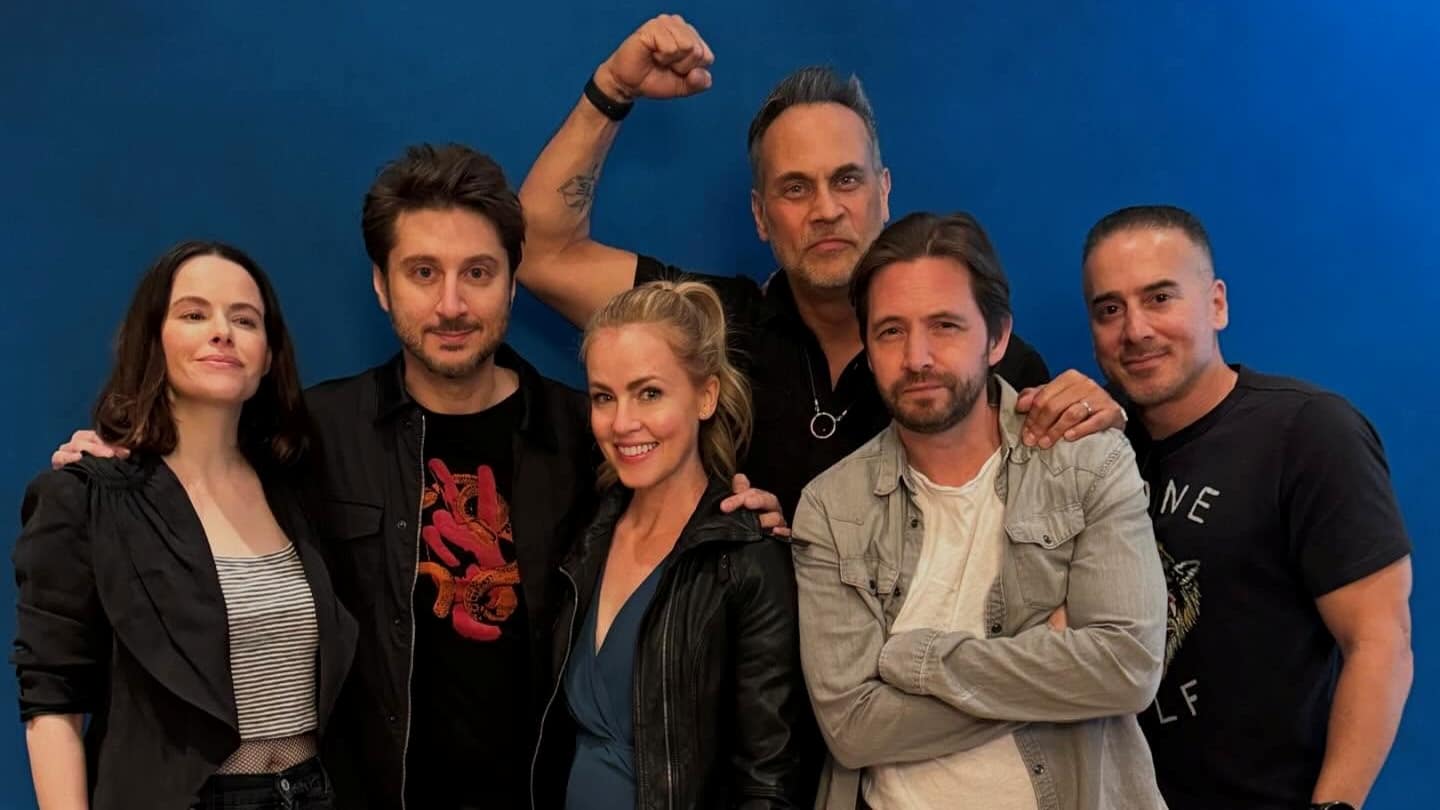
In February 2025, mere days before Matalas, Stashwick, and Emily Hampshire began shooting VisionQuest in London, they joined me for a 90-minute conversation about 12 Monkeys. Also, Amanda Schull — whose 2026 Marvel credential is Spider-Noir — joined the discussion. In fact, once the interview began, they all started talking to each other, laughing over inside jokes, for about ten minutes before I even asked a question. As Emily points out, this is a group of people who aren’t just colleagues. They genuinely love each other, and 12 Monkeys is still something deeply special to them. I get the sense that if they hadn’t had flights to catch and other real-life commitments, the conversation could have gone on much longer than 90 minutes.
12 Monkeys led to Picard which led directly to his hiring by certified Star Trek nut Kevin Feige for VisionQuest. I was curious what it was like for Terry after making the leap from Star Trek to the MCU, and what is it like working with Marvel Studios.
He replied:
“Well, like Trek, I was a massive Marvel fan well before setting foot in their doors. So it was intimidating to start as much as it was thrilling. But it has honestly been one of the most creatively satisfying and supportive studios I’ve ever worked for. Everyone there is brilliant and thoughtful and collaborative on every level. And willing to take big swings!
“A funny story: the day Kevin Feige called me about Vision I had actually referenced the brilliant Ship of Theseus scene from WandaVision in my Magic the Gathering writer’s room. So sometimes the universe aligns. And writing for Paul Bettany and James Spader was already on my bucket list. I’m very proud of what we’ve cooked up together.”
In a panel discussion with Brandon Davis, Terry called the “Ship of Theseus” scene one of the greatest television moments. Ensuring VisionQuest lived up to the standards set by that scene and WandaVision in general was the driving force for he and his collaborators in shaping the “finale” to the story that first Marvel Studios TV show began. Those of us who know and love 12 Monkeys know that if anyone could achieve such a lofty goal, he can.
The Oral History Of 12 Monkeys Part One: From Spec Script Through Season 1
(Note: The responses below have been lightly edited for clarity)
Terry Matalas: Okay. Now that we’re recording, Emily, I want you to start by talking about the dream you had about Amanda, and told us all about on set. Just verbatim
Amanda Schull: (Laughs) That’s stupid.
Emily Hampshire: No, Josh. All right. Well, okay. (Sing-song-y voice) She was the most beautiful woman in all the land. (Normal voice) Anyways, I did often have dreams about Amanda, because she was so beautiful and kind and so ridiculously talented. And so, I was always dreaming about her.
Amanda Schull: I have nothing to give you, Emily. That’s very kind.
Todd Stashwick: You dreamed the spin off. Didn’t you? He came up to me in the middle of Picard and he’s like, I dreamt the entire movie. The spinoff. The sequel [to 12 Monkeys]. The first act.
Terry Matalas: Yeah. Oh yeah. I dreamed it. It was like the first ten minutes, with music with Jennifer. Yeah, absolutely true. I was like, that’s how I would do [a 12 Monkeys sequel].
Emily Hampshire: It seems like we would all want to do 12 Monkeys again.
Terry Matalas: We would. Yeah. Actually, looking back, I was thinking about this the other day. It is we did that reunion in Las Vegas at a Star Trek convention. And to be around this cast again was just like it filled my heart in ways that I didn’t know were empty in the last what’s almost been 10 years since we [all worked together on the show].
Todd Stashwick: What Was wild about that, Terry, you and I were stuck on stage, and they were like spinal tap lost in the bowels of the convention center. And so, we had our first, or I had my first reunion with everybody in front of a live audience. And so, I couldn’t hide my giddiness.
Emily Hampshire: We do genuinely like each other. Like that’s rare.
Terry Matalas: And we keep in touch. I mean, we seldom will abide too long without checking in on each other, at the very least.
Todd Stashwick: Or sending pithy memes.
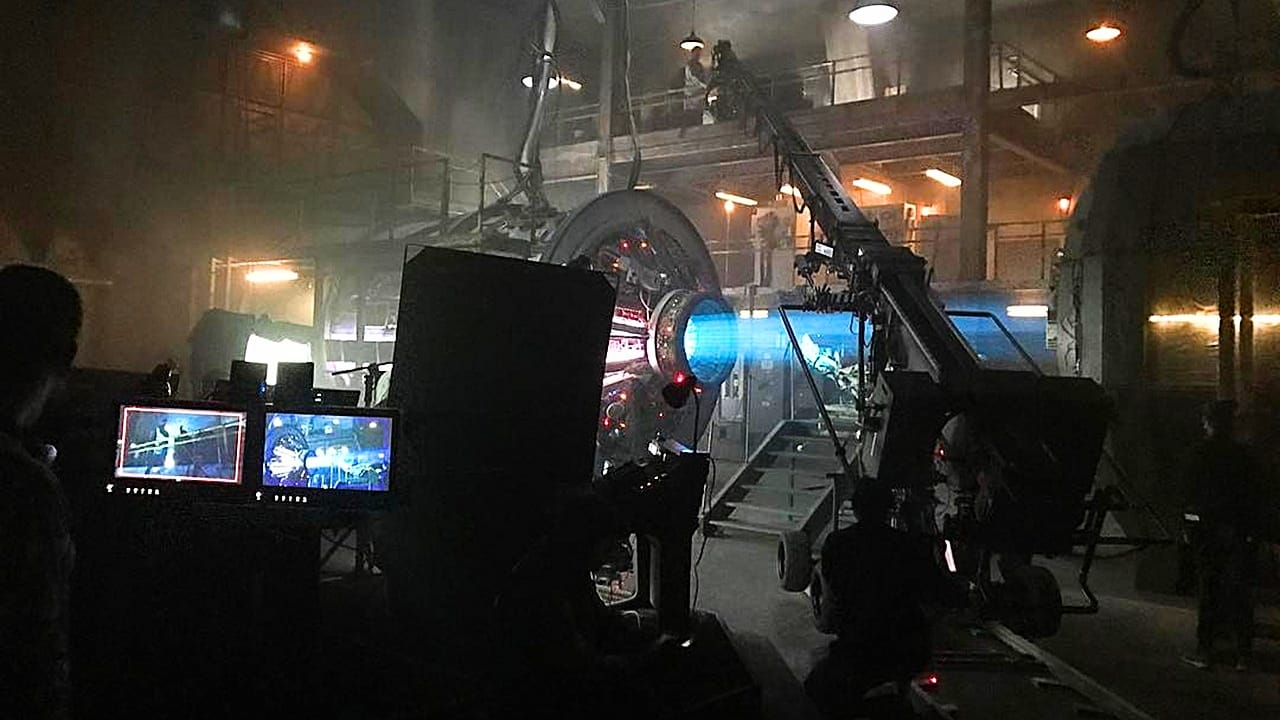
Emily Hampshire: Yeah. But what I think about now is that I remember when you, Terry, were showing me the time machine, and the tour of the sets. I had no concept of what It was like to create something in your head, and then have it like be there. You were so–you were almost crying. And I was like, ‘This is amazing.’ But it was my first not-comedy little show. It was a big show for me. I’d never seen anything like that before. And now I think of like, you were a baby.
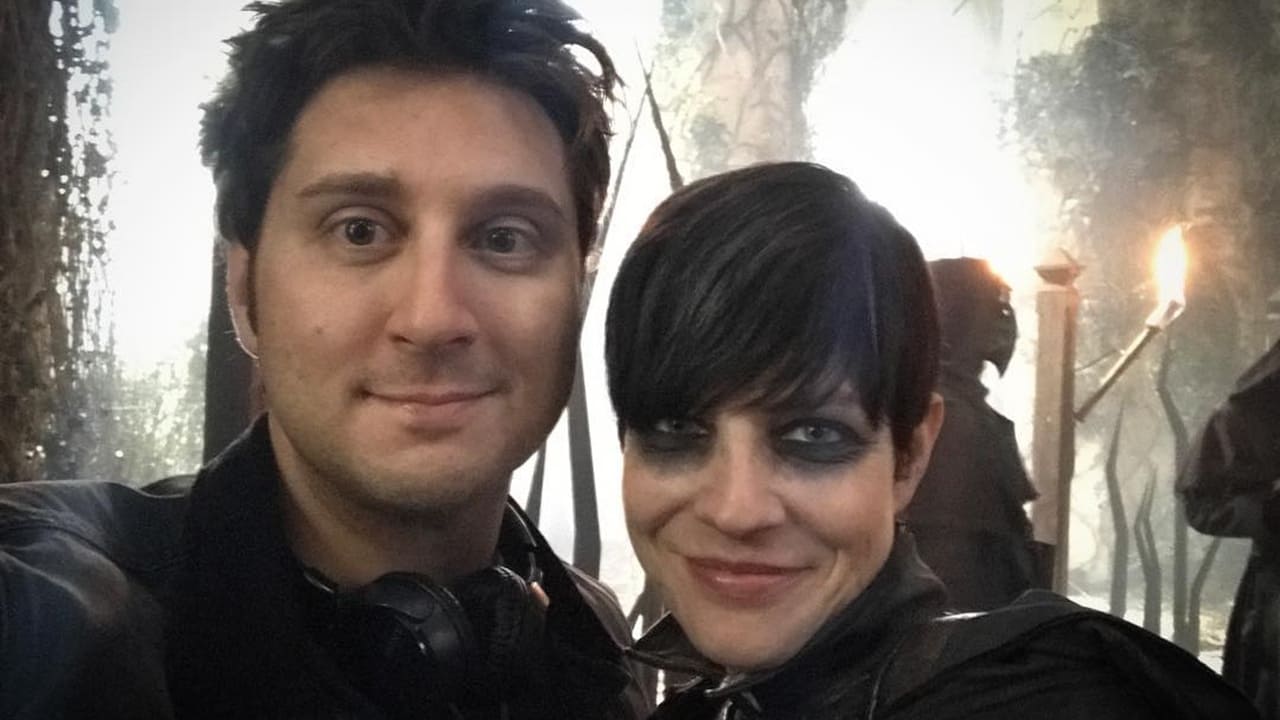
Terry Matalas: There’s a picture, one of my favorite pictures, of Amanda and me. I think we’re wearing construction hats while they’re building the time machine, and I was showing her the first thing.
Amanda Schull: That was pre-production before we even started the very first day of work on the entire series.
Terry Matalas: Of the series, yeah. Yeah, it was. It’s…(trails off with nostalgic smile).
Joshua M. Patton: Well, I hate to interrupt with a question, but I feel like I should say something to justify my presence. (Laughs). Let’s go back a little further, Terry, to start. You’ve talked often about how 12 Monkeys was Splinter, a spec script that you and Travis Fickett were just shopping around and it ended up in the hands of Atlas, who owned the rights to 12 monkeys, correct?
Terry Matalas: Yeah. Yes, that is true.
Joshua M. Patton: What was the original Splinter? Was it like George Lucas’s THE STAR WARS, you know, when Han Solo was the big furry alien and such. Was Splinter very different than what the pilot ended up being?
Terry Matalas: No, in fact, there’s entire pages of dialogue that are almost exactly the same. It was, I sat down in my kitchen table, and I knew I needed a writing sample and I had no idea what I was going to write. And I remember, I think I wrote exterior apocalypse. Two lone figures moved down the snowy ruins of blah, blah, blah, blah. I still have the script, and it was Cole and Ramsey, and they went to the CDC. The only thing that was different was some of the victims of the plague had changed into something else.
Emily Hampshire: Zombies?
Terry Matalas: It was, well, worse than zombies, like kind of…
Todd Stashwick: Republicans? (Everyone laughs) Boom!
Terry Matalas: But The Walking Dead had just come out and been a thing. So, we took that component out. But other than that, [it’s all there]. They found the watch. Then I knew it was like, ‘Oh, it’s a time travel thing.’ Then I had them come back in time. [The lead woman character’s] name was always Cassie. His name was Max, I think was the only difference. It wasn’t Cole. Then my manager read it and said, ‘It’s kind of like 12 Monkeys. Why don’t we send it over to Atlas? They’ve been trying to turn that into a TV show for a while.’ And many, many years went by.
Anyway, Travis [Fickett] came in and helped me finish the pilot. I got to the midpoint where I knew they were looking for this guy named Leland Frost, and they found him. And I got them caught. Then I’m like, ‘I don’t know what happens now.’ And then he read [the script] and he goes, ‘It’s the paradox. It’s the two watches he uses [to get away].’ I was like, (mimics surprise) ‘What?’
So, we finished it together, then went out with it together. We almost sold it like five times. BBC America almost had it for a while, and then after, SyFy wanted it. Then they didn’t want it, and then they wanted it again. It was a, pretty extensive process before we even got near [filming] a pilot.
Emily Hampshire: I love hearing this. I never knew any of this. It’s rare that we don’t know things about each other. But wait, was that your first spec, like that was your first script, sample script that you wrote ever?
Terry Matalas: Well, that was the first thing I sent. If I had not sat down at my kitchen table, I would not be here with you. I would not be in London right now. I would not–we would not be doing what we’re doing. I think about it all the time. And I’ll tell you what, and I mean this, this is so weird to say. I remember gearing up to sit down and do it. I was taking a walk, and there was something. I could feel that it was important, and in a really profound way. I don’t believe in any of that nonsense. I don’t believe in a lot of hocus pocus and all that stuff. But I can tell you, I remember it like it was yesterday. Just like I remember, when I first saw Amanda, I was like, ‘That’s Cassie.’ And Amanda will tell you, she came in and read and did chemistry read a thousand times, because I kept saying [to the executives], ‘No, it’s her. No, it’s her.’
Yeah, there’s just certain things that were right.
Joshua M. Patton: Well, building on that idea, Terry, what was it like when, after all that time, it was finally going to go? You were finally going to be making a pilot. Or was it a straight to series order?
Terry Matalas: It was a pilot. It was a pilot.
Joshua M. Patton: So, when you got the series order, how did that come about? Right after they saw the pilot?
Terry Matalas: The pilot itself was really difficult to make because we shot it in Detroit. We didn’t have a lot of money. There was a lot of pressures on who Cole and Cassie should be. It became this kind of high-profile project over there where a lot of people were weighing in. There’s a whole other chapter in a book that I can’t even talk about somebody who was cast and then uncast. And it worked out exactly how it was meant to. And then we shot this thing and we had no idea if, I mean, it could not go. But I remember having Aaron and Amanda over to [my house] watch the pilot because I was really proud. I thought it might be good. And then when we got the green light, boy, man, it was really exciting, but I was really young. I remember some of the things I was terrified of then, now I wouldn’t be terrified at all. I’d be scared of all the other things.
Emily Hampshire: What were you terrified of? Oh, sorry.
Joshua M. Patton: No, it’s a great question, Emily.
Emily Hampshire: I love it. I’ve never heard this stuff!
Terry Matalas: I think it’s so interesting. When I watch the first season, I can feel the meddling of insecure executives and a network in a studio that was unsure of time travel. I wasn’t the showrunner. Natalie Chaidez sort of wonderfully came in and supervised it. But that’s a difficult position for anybody to be in. And she’s just trying to make sure everybody’s happy, these young writers and a studio, and there’s just so much, and you can feel it. It starts, I think, maybe towards the end of season one, starts to really feel like the show is finding itself. And it’s really season 2 when they handed it to me and said, ‘Okay, just do what you want now.’ That the handcuffs were off and we could kind of be this super weird, time travel, supernatural show that we ended up being. It was a strange journey.
Emily Hampshire: I just watched it recently. Ah! I’m sorry.
Joshua M. Patton: Oh no, no. Please, go ahead. We want to hear from you! (Laughs)
Emily Hampshire: No, but I just watched it for the first time in maybe a decade, the pilot. And it is so good. Amanda, that [pained] face [you’re making] doesn’t work here because it is so good. And like holds up in ways that you wouldn’t think when you look back on it. I can be objective because I’m not in it. It was really good. You know, when things are like, oh, what do they call that? Aging badly? What is it?
Todd Stashwick: Doesn’t hold up?
Emily Hampshire: It holds up! It doesn’t age badly. Yeah, it’s…anyways, that’s all I’m going to say. I’m done speaking now.
Joshua M. Patton: Please don’t be done speaking. I have plenty to ask you, too. But Amanda, I did want to hear your version of finding this show and the audition process. You know, as Terry mentioned, networks were reticent back then about time travel and genre stuff. Was that something you were looking for?
Amanda Schull: Well, networks were reticent about me, first and foremost. Not just time travel. I was not a genre head. I very quickly figured out that I needed to start making my own diagrams and graphs and whatever else to understand it. But yeah, as Terry said, I got the script, and then I went in maybe close to 10 or 11 times to audition for the role. Something like that, something like that. Terry was, and maybe Travis, I don’t know, but Terry was probably the only champion for me. I had to keep, trying time after time after time to convince them that I was the right person for the job.
And so, the reason I made that face when Emily was talking about the pilot is because I felt very insecure about my footing doing the pilot. Knowing that I wasn’t the person that everybody [at the network] wanted. I felt insecure about making choices. And so, when I watched the pilot, I see an actor who didn’t make strong choices because I was afraid that they were going to be the wrong ones. So, I didn’t, you know, like really commit to things, because I didn’t feel confidently about it. But I know that’s sort of like a wah wah, sad part of the whole thing. Everything else about it was overwhelmingly exciting. I mean, I still have photos on my phone.
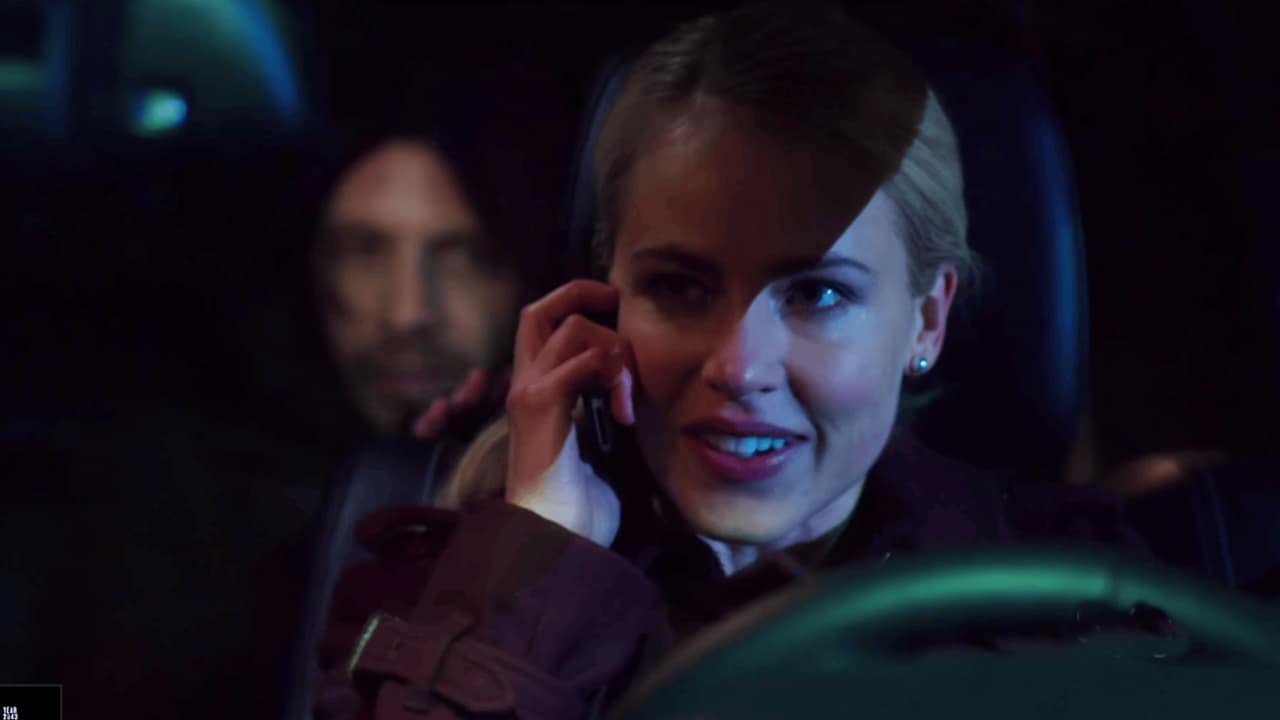
When I got the phone call that the show was being picked up, I remember thinking this is a really big moment and I was by myself. Actually, I was driving, I was in a car coming back from another job and I got the phone call, and I said to the driver, I was like, I just got a really big job. And the driver was like, ‘Good for you.’ And I was like, ‘Yeah, no, this is a really big deal.’ (Amand and Emily laugh). [He said] ‘Good for you.’ And then I told myself, ‘He doesn’t get it.’ So, when I got out of the car at my house, I have all of these pictures, like selfies of me trying to like memorialize the moment, but not really knowing what to do with it. So I was like (mimics taking emotive selfies). I was really trying to be happy to like capture it because I knew that it was going to be something special going forward. And what it ended up being was so much more than that.
Emily Hampshire: But selfies were like new then, right? So you were also.
Amanda Schull: Yeah, (sarcastically), I started [that trend].
Terry Matalas: It wasn’t THAT long ago. We had selfies.
Emily Hampshire: Yeah. Amanda, what’s really interesting is like, I could never do something where you know people don’t want you to be there.
Terry Matalas: That’s not, I mean, that’s not, that’s not, that’s not really true. It wasn’t that people don’t want you. Someone else was cast as Cole and had approval over who his Cassie was. And that person was making a very specific choice. But ultimately, because they made their choice, that was what had them removed from the project. It worked out pretty great, actually, but it was a lot of stress.
Emily Hampshire: Anyways, you’re amazing in the pilot. And maybe it’s because it was stress because it like (mimics her mind was blown).
Amanda Schull: Thank you.
Joshua M. Patton: Emily, you appeared at the very end of the pilot, but you weren’t cast until the show was picked up, right?
Emily Hampshire: Yeah.
Joshua M. Patton: So Terry, can you talk a little bit about that, about like, you know, again, sort of the momentous part of Brad Pitt’s character, and changing it to Jennifer and how you got so lucky as to get Emily to play the role.
Terry Matalas: Yeah. Originally, it was going to be, we were going to keep it a male character. And the pilot kind of needed another kind of cliffhanger, another thing that’s sort of related to 12 Monkeys. And I was like, well, we got to bring in the Brad Pitt character by the end of the pilots before making it. And it just didn’t feel great. It was like, who are we going to get? In fact, I talked to Aaron Stanford originally, and I was like, if I’m going to do it, it’s got to be you. And then?
Amanda Schull: Well, can I interject? Because Cole was written very, the physical description of Cole did not match Aaron Stanford.
Terry Matalas: Oh? (smirks) How was he written, Amanda?
Amanda Schull: (Smiles) Terry’s setting me up to be an asshole, (everyone laughs) but I’m not going to fall for it. I’ll just tell you honestly, the physical description was supposed to be like this giant brute.
Terry Matalas: Yeah, he was a brute. He was a, he was like a 6 1/2 foot like massive guy.
Joshua M. Patton: Like a Jack Reacher type?
Amanda Schull: Yeah.
Terry Matalas: I mean, he was Bruce Willis. I mean, he was a guy who was beefy and had been in the apocalypse. Yeah. But we got to Jennifer by the fact that I didn’t think there was a single male in the world who would ever be able to do Brad Pitt again. And I said, what if we found an amazing woman? Then when it came to series and it came down to cast, we saw hundreds and hundreds of auditions to play Jennifer. Some people who were named, who had names and some didn’t. And I just didn’t like any of them.
Emily Hampshire: (dryly) I don’t believe some of them didn’t have names, though.
Terry Matalas: What?
Todd Stashwick: (playing along) Everybody has a name.
Emily Hampshire: Yeah!
Terry Matalas: (Rolls eyes) Yeah. Finally, I found Emily’s in the Canadian, Toronto local batch.
Emily Hampshire: [More like] a box. A VHS box. (Everyone laughs)
Terry Matalas: It was as if it was written [for her]. She was already Jennifer Goines. It was just add water. And I remember–
Amanda Schull: (smirking) Or add Diet Coke.
Emily Hampshire: (Nodding) I AM dehydrated.
Terry Matalas: (Laughs) Yeah, add Diet Coke and a vape. And so, and it was the same kind of thing. I was like, it’s her. And they were like, wait, what? No, we thought we wanted to stunt cast this. I was like, no, it’s her. And in fact, you had to come in and do a chemistry read with Aaron. Remember that?
Emily Hampshire: Yeah. And I had to do another one, because you did tell me, which is kind of nice. You did tell me they wanted a ‘big name’ person. And like, so I knew that I had to really come in and [bring it].
Amanda Schull: (shocked) You told Emily they wanted a name before she auditioned?
Terry Matalas: I don’t think I said that before.
Emily Hampshire: No, before my third audition, because I went in and read for the American casting directors.
Amanda Schull: So, did you tell her that right as she was walking in the room?
Terry Matalas: (Joking) That’s how I got the performance. It was my genius, best move. I was like, ‘Hey…’ I wanted to see Fear. [I told her] they want this other actor. (Being serious) No, I don’t know when I told you that. I’m not sure if that’s true.
Emily Hampshire: [Blurts out recognizable actor’s name]! You told me!
Terry Matalas: (Eyes go wide) No! Shh. We can’t. (Sighs) That’s true. OK, well, that’s actually true. That’s who the studio wanted.
Emily Hampshire: I’ll never forget that.
Terry Matalas: I’ll never forget that. It was like, what the fuck? But, you know, [Emily] won him over. I think Todd probably had the easiest. Todd walked in. We were seeing, you know, we’ve told this story many times. The character was supposed to be like Ed Harris. you know, like fatherly, grunty guy. And then Todd walked in. And it was like, I’m not doing that. Todd, I’ll let you tell your story.
Todd Stashwick: I’m going to back up just a sec and say the first time I heard about the show, it was competition for a show I had in development at Sci-Fi. Because Fung was our mutual producer. And she was shooting your show while we were going through development on this thing. And so, in my heart, I’m like, I wonder how much room there is on the schedule. So, if they pick up 12 Monkeys. Are they going to pick up mine? Needless to say, they didn’t pick up the one that we were writing. And then they picked up 12 Monkeys. Four months later, I get the script. I’m like, oh, well, they apparently picked up 12 Monkeys.
So, I read the part, and I could see all the description of, like, this Ed Harris type. And I was like, why does a guy who’s got 200 people with, like, rifles have to be tough? They get to be tough. And in order to win them over, I was like, well, he’s got to be charismatic. He’s got to be like a cult leader or a used car salesman. And that’s sort of what made sense to me because I already have this face. Like I already have resting villain face. Like I walk in with dark circles, garbage truck voice, but I wanted to play him like sympathetic to his guys. Like how do you win somebody over? You don’t force them to join you. You open the hand and you make them want to be a part of it. And then you can show the horrible side later, but he has to have the honey trap first.
And then as the story goes, in order to make him sort of fun and approachable in the audition, the moment that Cole introduces himself, instead of extending my hand in the audition, I curtsied when I said Deacon. And I looked over and Terry’s like, that’s funny. Never made it into the final version, but it was enough to get me the part.
Joshua M. Patton: It’s interesting because I don’t know, again, I admit to being one of those people who was like, why make a 12 monkey show? And then I started watching when Todd’s first episode aired. I binged the first four episodes, and by the end of episode 4 is when I was irrevocably hooked because, you know, Terry, you said the show sort of became itself towards the end. I feel like Atari, with its time-travel-y twists is the first glimpse of just how brilliant this show could be.
Terry Matalas: Four was actually ironically the second script ever written. They picked up an extra script while we were shooting the pilot and I was like, let’s write that one because it demonstrates the show. It was a loop and showed you a different flavor of the show set in the apocalypse and not in the present. So that was our backup.
Todd Stashwick: That was only episode four?
Terry Matalas: Yeah.
Todd Stashwick: I feel like I came in way late in the game, but I guess not. Beause I was at the end of three. I was sort of the tag. When [Max] comes running up and I’m sharpening knives, yeah. Wow.
Joshua M. Patton: So Atari was in like intentional example of how 12 Monkeys could be different? Because that’s what it felt like to me. It also felt like a statement that this is going to be totally, completely different than that Terry Gilliam movie all us nerds like.
Todd Stashwick: Yeah. Just like what I loved about it was the little, the world build-y stuff, like with the powder saying, I got this from the Sisters. Just as we don’t even know what that means. (Terry nods as if he did). Okay maybe they knew what it meant (Terry smirks and shrugs), or maybe they didn’t. And they’re just sort of saying, you know, the Kessel run and it means something and you just say it with authority. But there was all this stuff. Just that word tells you there’s this entire culture and parameters that we don’t know about this world and makes us want to know more. I loved it.
Emily Hampshire: Terry would always do that to me, too. That would be like we’d be shooting and he’d say, say, ‘Climb the steps, ring the bell.’ And I had no idea why. And I was climbing these steps. And you were like, climb the steps, ring the bell. And all these things that later came out. Was it when Cassie and Cole were doing it, and I said, ‘Butt stuff only?’
Terry Matalas: No, the line I had you say was ‘Being single is not the end of the world, but you two together is though.” And it was before we revealed that they were the parents of the Witness.
Joshua M. Patton: Yes! I remember catching that on my first rewatch, I think, in like the second episode of season 2. You guys did that a lot, right, Terry? You would just put stuff in there that like explained, like basically gave away the big secrets. You know, that the Hannah calling Cole, “You little shit.” all these sorts of things that retroactively are obvious. But at the time, people really didn’t pick up on. My only question is how? did you pull that off? Because it is…
Terry Matalas: How did we pull it off or why?
Emily Hampshire: Yeah. Did you know?
Joshua M. Patton: I mean, “Why” is what you can answer, but “How” is what the writer in me wants to know. (Laughs)
Terry Matalas: I mean, in fact, I mean, it’s ludicrous that I did this, but I remember Brooke’s first day I said, ‘Oh, by the way, you’re his mom.’ And I should not have actually done that because if it hadn’t worked out…you know what I mean? Like there was like, you’re not, you shouldn’t, you really shouldn’t do that. But I couldn’t wait because. Yeah.
Emily Hampshire: Did you know though all those things was the ending? Like when you said Climb the Step, you knew.
Terry Matalas: Wow. I knew that climb the Steps ring the bell. I knew we were going to go to a kind of temple that was going to be like the nexus point deep into either season three or four. I knew that would involve a paradox. I knew we were going to build to a big mythological thing. I didn’t know the exact details of it, but I knew it would be something. I think we used to be like the time temple or some bullshit was what we scribbled down.
I knew we were headed towards that. And always.It was just from the original first season pitch, like here’s the kinds of things we’re going to do. What we’re going to build towards. And a lot of that had, I think was probably inspired by Battlestar Galactica in the way that show is — which I’m going through a repeat watch of now and it’s just brilliant — I’ve gotten to know Eddie Olmos and Mary McDonald and Katie Sackhoff now and I’m like kind of just going back and watching the brilliance.
Todd Stashwick: I like how you just avoided Gaius Baltar. In your list.
Terry Matalas: Oh [James Callis], of course, yeah. But like we’ve known this forever. That show when it did mythology up against sociological issues and heavy sci-fi and incredible human drama, it was so well thought out that it was really probably the largest inspiration for what we were doing in our little show.

Joshua M. Patton: The other thing I wanted to sort of get at is, especially if like during that first season, I wondered if Amanda, Todd and Emily, if you guys could all talk a little bit about what it was like that first season, sort of finding your characters and then how that evolved as the show went on. And then, you know, Terry, of course, you can jump in and talk about like how much of it was the writing, how much of it was the actors defining the characters themselves.
Amanda Schull: Shall I? think as Terry mentioned, he already had an understanding of where things were going and every once in a while, Terry, I mean, he didn’t direct any of the episodes on paper the first season, but he was pulling a lot of the strings in our ears to really, at least for me in particular, to facilitate my understanding of who she was, who she was going to become, who she was at any given moment, Cassie. And what I needed to keep in mind, because I don’t think I would have been able to navigate that with my own imagination on my own.
And so I remember 107 – is that when Cassie dies in Cole’s arms the first time? Yeah, 107 at the CDC. And, I just wasn’t really getting it. And Terry came over. Because these were all kernels of his imagination. The world itself, stemmed from his vivid imagination. And he said to me, this is years and years later, you’ve already had a life with him. You two had a child together. And I was like, ‘What!?’ And that just completely changed everything in my head. I didn’t know any of that. I didn’t know that was going to be, well, I mean, the end game, obviously.
Terry Matalas: I said that? I actually said you’ve had a kid? Wow.
Amanda Schull: You said you had a child together. You didn’t go into any kind of detail. So then, I had something like 5 minutes to imagine that, to create that. I was trying to like get that going, but without that guidance, I wouldn’t have been able to three-dimensionally create her on my own.
Joshua M. Patton: That’s so interesting because I remember at the end of season 2, I went back and watched that scene like ten times because I remember feeling like all the answers were in that scene. Like there was something in there telling us what was coming. And that was even before we knew season 3 was coming. So.
Terry Matalas: Before we knew that season, there was a, I’ll tell you about that in a second.
Emily Hampshire: Oh yeah. I remember my first day very well because it was, so I was at the time doing Schitt’s Creek. And that was my first television thing, but it was like Canadian and we all, it was very, we had one director for the whole thing. It was–
Amanda Schull: And it was shot on VHS. (Everyone laughs)
Emily Hampshire: Basically, basically. And so going into 12 Monkeys was like my first American show with like, this is what I remember. My first day was everything I had in episode two. And the director, who I love now, but at the time he was like, can you do a walk and talk? And I didn’t know, A) what a walk and talk was, B) I could not walk and talk. I could either talk or I could walk. Also I had to go in a straight line and which sounds very simple, but I also had to do this other thing…it’s actually, it’s actually cut out of the thing because I probably did it so badly. But what was, I was kind of freaking out just because I’d been cast in this [show].
Amanda Schull: This is everything at the hospital [in the second episode]?
Terry Matalas: Yeah.
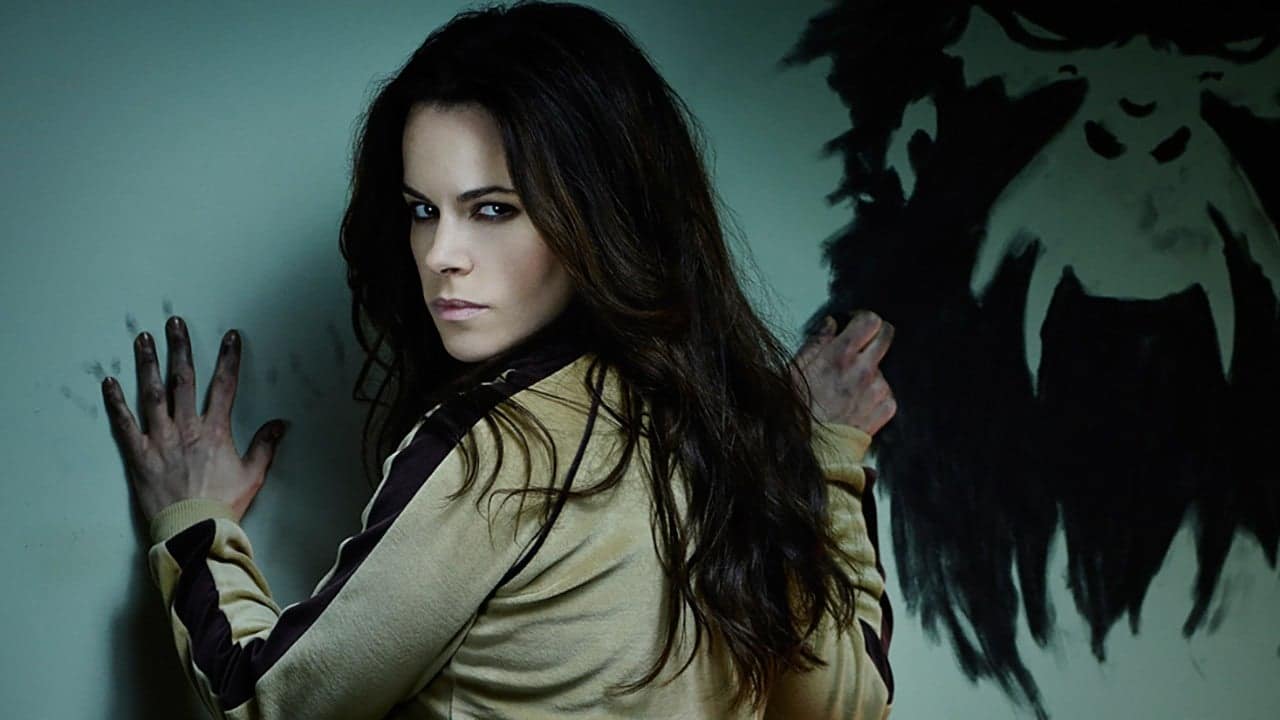
Emily Hampshire: But then Terry took me aside and he said, ‘Do what you want. Just do what you want.’ And that was– from that point on, Terry let me have ownership [of Jennifer]. Even just us, that us together I could do anything and say things that weren’t in the script. It was just liberating.
Terry Matalas: I remember that day, vividly. Because we both had a lot at stake because I had gone to the mat for you and it was like, that’s Jennifer Goines. And it was kind of like, well, let’s see what you guys got.
Emily Hampshire: And I couldn’t walk and talk.
Terry Matalas: But Emily is lightning in a bottle. She is raw. She will never do it the same way twice, you know what I mean? And especially at that time, you were so young compared to like how seasoned you are now. I was terrified. But, yeah, I remember that moment. I was like, ‘This just has to work.’ And I think you were getting thrown by some of the direction you were getting. And I said, ‘Just be you. But you’re also Jennifer. You are Jennifer. And then the second, again, you had the cuffs off. You were just doing the thing. It was like, there she is.
Emily Hampshire: Because I was trying to be in a TV show. I felt like the director at the time was frustrated with me. Which I get because I wasn’t I didn’t know how to be in a TV show. And I was trying to [be a TV actor]. And then you just to me to be a human person.
Terry Matalas: Yeah. When she means a TV show, it means like, you have no time when you’re making television. We’re all, we all still do it. You think you’re going to have a day to work on a scene You often do not. You have a couple of hours. And every minute counts. And that pressure can destroy people. It’s very hard.
Emily Hampshire: But also playing Jennifer, I felt like I didn’t know how to be Jennifer within the constraints of– now I could do it– but in the [way directors want you to] like, ‘So you’re going to go here and get to there, and just do it fast.’
Amanda Schull: But you also, okay, so if I may, there’s nobody else like Jennifer Goines, the character that Emily created, on television. So, she doesn’t have anything else to pull from, right? She’s not able to do the thing that we’ve seen done before. This is all her creation with facilitation from Terry. So, I can see how that would be really intimidating, because especially if you’re new to television — which that’s strange, Emily, I would never have thought that you were new to television [at this scale]. She’s doing something that’s totally original.
Emily Hampshire: I had only done indie movies, and indie Canadian movies means like [smaill].
Amanda Schull: You did a Hallmark movie.
Emily Hampshire: Not before 12 Monkeys.
Amanda Schull: Oh, really?
Emily Hampshire: Yeah, that was after.
Todd Stashwick: Em said something about when Terry walked up and said, ‘Do what you want.’ I think the biggest thing for me, even from the audition forward was, and this is a hard thing, and it is a rare thing, which is permission. Permission to take risks, and permission to feel supported by the writing and the director and the set. Like, I’ve been on a lot of sets. I think I’m the oldest one here. I’ve been on a lot of sets where it’s like, just don’t move the furniture, man. Just hit the mark, say your line, and leave. And don’t really try anything.
Emily Hampshire: Yeah, [they tell you] don’t do anything surprising.
Todd Stashwick: Yeah, and I think because, I think by the time that I got to auditioning for 12 Monkeys, I had already been in the city for, well, what was that, 2015? I’d been in the city for over a decade, and I was already in fuck-it mode. So, I just was like, all right, I’ll try this. And if it doesn’t get me the part, well, fine, it’s not what they wanted, but that’s what I’m bringing to the party. I think the scene that we were just referencing that clicked it for me was the scene with Aaron when we were cutting him open and putting the powder in. And there was a freedom there that was given by the set and by Terry. You think ‘Oh, I can play in this space, and I can try things.’ And it may not always work, but there was a trust in the craft. That was my first episode, really. That was ‘Atari.’ But I think based on knowing what they let me do and get away with in the audition, I was thought, ‘OK, well, I’m going to do this.’ Because these were kind of the things that I was arleady doing. And it felt amazing to be supported because so often you aren’t.
Amanda Schull: Well also, big swings aren’t really encouraged with network television. And that was more the norm before. It was really before streaming was a big thing. And with streaming, there are bigger characters and there probably is more permission. There are fewer cooks in the kitchen.
Todd Stashwick: And we weren’t streaming yet, right? We were just cable.
Amanda Schull: So, for Terry to hire people whom he trusted, was kind of novel, I think.
Todd Stashwick: Well, that goes back to a lot of the things that I think, again, we’re often asked about you, Terry. And so, I think, and I say this, obviously it sounds sort of patting myself on the back, but what I’m saying is what I’ve seen across the board in all the projects that I’ve been fortunate enough to work on with Terry is he has an impeccable eye. He has an impeccable ear. for music, for the timing of a scene, for casting. I believe he does.
I’ve watched him edit scenes. I’ve watched him listen to the composition with the composer. And across the board, what I’ve noticed, and I’ve said this before, is he makes shows that he himself wants to see. Shows he wants to be entertained by. And so that– it’s not just– he’s not just making widgets. Like, he’s making entertainment. And he is the biggest fan of good entertainment. And so that’s always his goal.
Terry Matalas: They’re being way, way too kind.
Emily Hampshire: No, but, like, play– you said something about, like, he lets you play. And that, to me, is everything that, like, we would have fun coming up with stuff and let you kind of– There was no failing. Like I thought the unicorn was an actual extinct animal. I did, that was okay.

Terry Matalas: (Smiles and nods) True.
Todd Stashwick: True story. This is your scoop.
Emily Hampshire: However, I also didn’t get time travel. Like Terry, for all of it, kept trying to just explain time travel. He drew diagrams, everything. The time I got it was when old me said, ‘Hello egg, I’m chicken.’ And I made that the name of my company, because I finally understood everything about the world. Hello Egg.
Joshua M. Patton: Well, that’s actually another thing. Okay, this is just me as a fan asking now. How much of Jennifer was written? Because talking with you now? It does feel very much like you, Emily. So how much of it was your interpretation of what was on the page and how much of it was knowing Emily and putting that into the script?
Emily Hampshire: I think it started out as the Jennifer that was on the page and then Terry got to know me. (To Terry) You can tell me if this is true or not. But I felt like Terry started to write for all of us, like how we all were. So I don’t know? Terry?
Terry Matalas: Yeah, we would also try things on the day. But with all of them, you know, there are certain moments that were improv. I would say less so with Cole and Cassie because they were on a very specific drive. It was very plot-driven, but by the end, when they had a real relationship–sometimes we’d say, ‘I think this is a couple spat.’ Like [when they argued about] who shot first? We started to find a lot more of everybody’s voice. But Jennifer, Jennifer was definitely written because she has very specific exposition that she usually has to get out. But Emily will find brilliant lines. All of them will, to be honest. But with Jennifer, there are very specific Jennifer lines that are just Emily Hampshire.
Emily and I used to get into trouble. Because it was a very serious set in season one. And she would try things that I thought were hilarious. And I was like, ‘Hold on, we’re going to go do another one.’ But everybody wanted to move on. And I’d say, ‘Okay, now try this and try that.’ And all that stuff would end up on screen.
Emily Hampshire: Except the time that tail whip scorpion went in my mouth, and I stayed in character.
Terry Matalas: What about when the rat pooped in your mouth? That was.
Emily Hampshire: That didn’t go, but you, I heard everyone laughing. You kept the behind-the-scenes footage of that.
Terry Matalas: Sure do. I watch it daily.
Todd Stashwick: You know her character is so indelible when you see how amazingly Allison Richman recreated it [in Season 3, Episode 5 ‘Causality.’
Terry Matalas: Yes, exactly.
Todd Stashwick: When she had to do Jennifer in that flashback. And it was so spot-on because the shapes of your work, Em, are so specific that she was able to recreate them. There was a moment when I first saw it, I thought it was overdubbed.
Joshua M. Patton: Same here. I thought I had to like go. I was like, wait a minute, is that Emily or is that her?
Terry Matalas: But no, you recorded it. Didn’t you do it for her on the phone?
Emily Hampshire: I did! I sent her a video, but then she did it.
Terry Matalas: She did. She was able to do it exactly.
Emily Hampshire: That was confusing. (Laughs) Like, I didn’t know that I was that crazy. (Everyone laughs.)
There’s so much more of this wide-ranging and in-depth conversation, starting with Terry and Todd discussing how his character, Deacon, became a series regular starting in Season 2. The next installment will go into those stories, and the moment that both Terry Matalas and Amanda Schull were hurt by a startling fan reaction to Cassie’s character arc. They also tell the harrowing story of how the brilliant 12 Monkeys series was almost left unfinished because of the uncertainty of the show’s chances at renewal. As epic as the show’s story was, the story behind the scenes is just as riveting and triumphant.
12 Monkeys is available to own on DVD, Blu-ray, digital, and it streams on Prime Video, alongside Spider-Noir with Amanda Schull. VisionQuest debuts October 14, 2026, with new episodes following each Wednesday on Disney+.


