

At the 60th Annual CMA Awards on November 18, country music’s women weren’t simply invited to the party. They practically reorganized the seating chart. Ella Langley collected a historic six awards, Miranda Lambert helped create some of the evening’s biggest winning music, Lainey Wilson hosted, Kacey Musgraves joined Lambert onstage, and Taylor Swift returned after 13 years, presumably because she had a free evening between running the global economy and making Ticketmaster reconsider its life choices.
And then there was Dolly Parton, whose influence loomed over the celebration like a rhinestone-covered reminder that women have been outsmarting the music business for generations. But the real story wasn’t simply who carried home the most trophies. It was how clearly these artists demonstrated that country music’s power no longer has to look, sound, or operate the way it once did.
Perhaps even more surprisingly, the CMAs themselves seemed to understand the assignment. For an awards show celebrating its 60th anniversary, the ceremony managed to honor the past without making the present feel like an unwelcome houseguest. And that might be the most encouraging development of all.
Ella Langley Didn’t Break the Glass Ceiling. She Took Home Six Pieces of It.

There are good nights, career-defining nights, and then there’s whatever Ella Langley did at the 2026 CMA Awards. Six trophies, one historic sweep, and presumably a very exhausted person backstage responsible for repeatedly locating her seat. By the end of the ceremony, somebody should have just installed a revolving door between Langley’s table and the podium.
Langley won Entertainer of the Year, Female Vocalist of the Year, and Album of the Year for Dandelion. Her hit “Choosin’ Texas” also claimed Single, Song, and Music Video of the Year, giving her a record-breaking six wins in one evening. But the significance wasn’t simply that one woman collected enough hardware to open a small sporting-goods store.
Consider what those categories represent. Song of the Year recognizes songwriting, Single and Album of the Year acknowledge the recordings and the people behind them, and Entertainer of the Year recognizes an artist’s broader achievements. Langley wasn’t being celebrated for one catchy chorus or one particularly successful moment; she was being recognized across nearly every dimension of her career.
That’s important in an industry where women have historically struggled to receive the same radio exposure, touring opportunities, and institutional support as their male counterparts. Being a talented singer hasn’t always translated into being treated as a commercially indispensable artist. Langley’s sweep suggests that the boundaries between artistic credibility and commercial influence are becoming harder to maintain.
And there’s another woman behind much of that success. Miranda Lambert co-wrote and co-produced “Choosin’ Texas” and helped produce Dandelion, earning three awards herself. That’s not simply an established star graciously welcoming a younger artist into the industry; it’s an established star actively helping create the music that makes the next generation successful.
The distinction matters because country music’s power doesn’t exist exclusively onstage. Songwriting rooms, recording studios, publishing companies, and production credits determine whose voices reach audiences and whose careers have staying power. Lambert’s involvement demonstrates how established female artists can exercise influence beyond their own albums while helping create opportunities for other women.
Langley’s achievement doesn’t mean country music has suddenly eliminated every obstacle facing female performers. Six awards cannot fix an entire industry’s structural problems, no matter how many acceptance speeches they require. But the combination of Langley’s artistic success and Lambert’s creative leadership offers a more compelling model of female influence than simply celebrating a woman for winning Female Vocalist of the Year.
Dolly Parton Wrote the Playbook. Everybody Else Is Finally Reading It.
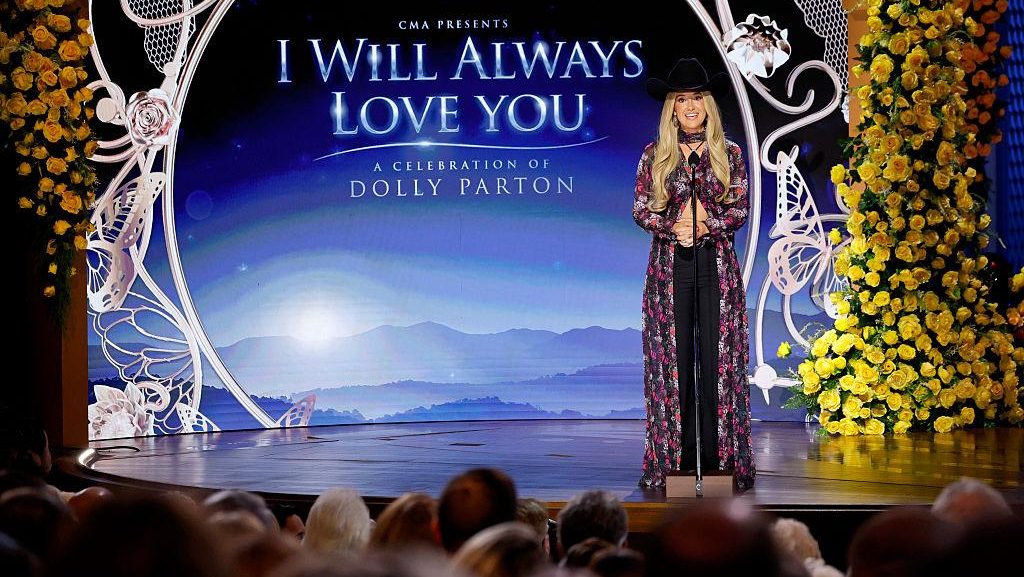
Dolly Parton understood the business of being Dolly Parton long before the entertainment industry decided that women controlling their own careers was an inspirational concept worthy of a documentary. She wrote songs that became cultural landmarks, retained control of valuable publishing rights, built an entertainment empire, and cultivated a public identity that could move between country music, Hollywood, philanthropy, and business without losing its essential character. And she did all of that while allowing people to underestimate her because she wore enormous wigs and enjoyed looking spectacular.
Consider one of the most revealing decisions of her career. When Elvis Presley’s team wanted to record “I Will Always Love You,” Parton declined the proposed publishing arrangement rather than surrender a substantial share of her songwriting rights. Whitney Houston eventually recorded a version that became one of the defining songs of the 1990s, proving just how valuable Parton’s decision had been.
Somewhere in the great beyond, an accountant is still applauding. Dolly understood that immediate prestige wasn’t necessarily worth sacrificing long-term ownership. And that lesson remains just as relevant to today’s female artists as it was when she made the decision.
Parton also built Dollywood, developed businesses, and became one of entertainment’s most recognizable personalities without pretending to be anything other than herself. The enormous hair, outrageous outfits, and self-deprecating humor weren’t evidence that she lacked seriousness; they were part of a public persona she understood and controlled. People could underestimate Dolly Parton all they wanted, but they generally had to pay her first.
Her legacy matters because the women shaping country music today are exercising similar kinds of authority. They’re writing, producing, collaborating, developing recognizable artistic identities, and finding ways to build careers that extend beyond traditional expectations. Dolly wasn’t simply an example of a woman succeeding in country music; she demonstrated that a woman could become an institution all by herself.

Vince Gill and Lainey Wilson — “I Will Always Love You” (official CMA performance page)
Taylor Swift Didn’t Abandon Country Music. She Made Its Borders Look Ridiculous.
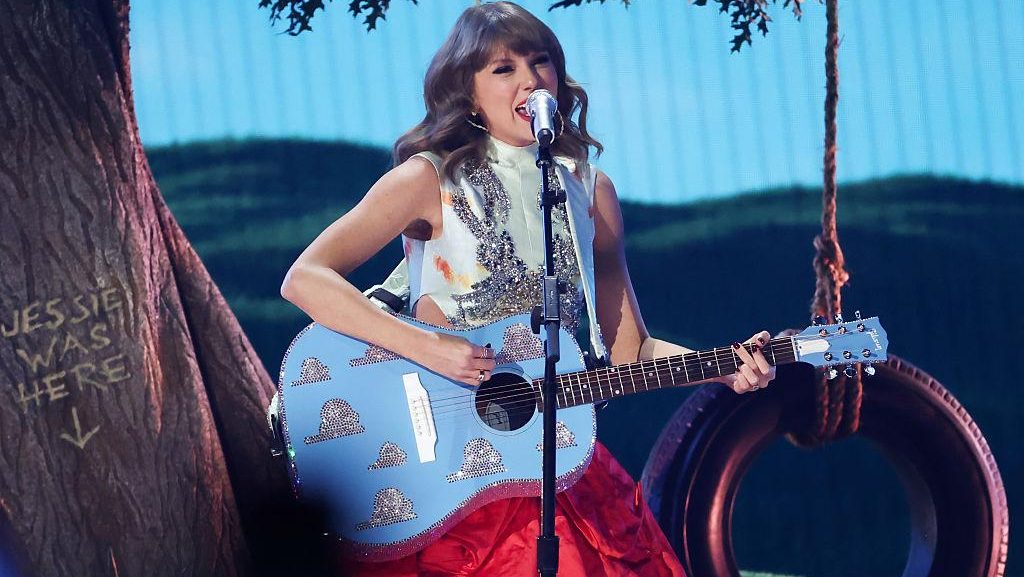
Taylor Swift returning to the CMA Awards after 13 years sounds like the beginning of a touching homecoming story. A Nashville girl comes back to her roots, revisits the music that made her famous, and reminds everyone that she was country before she became a global pop phenomenon. Except Taylor Swift didn’t return as somebody looking for Nashville’s approval; she returned as Taylor Swift, which at this point is less a musical identity than an international economic event.
Her performance paired “I Knew It, I Knew You,” from Toy Story 5, with “Our Song,” the early hit that helped establish her as one of country music’s most promising young songwriters. Keith Urban joined on banjo, and an extensive collection of country stars participated in the medley. The performance connected two very different stages of her career without pretending that the distance between them was insignificant.
And let’s appreciate the absurdity of Taylor Swift treating the CMAs like a quaint little homecoming when she’s reached the point in her career where Madison Square Garden is practically a living room. Most artists dream of playing the Garden, but Taylor could probably sell it out by announcing she was stopping by to look for an earring. At this point, the venue would probably offer her naming rights to the lost-and-found department.
But beneath the spectacle was a genuinely clever musical decision. “I Knew It, I Knew You” represented an artist whose work now extends across music, film, and popular culture, while “Our Song” recalled the teenage songwriter who helped introduce an entire generation of listeners to country music. Putting them together didn’t erase the distance between those two versions of Swift; it celebrated just how much territory she’d covered.
Swift won CMA Entertainer of the Year in 2009 and 2011 and received the Pinnacle Award in 2013. Her subsequent transition into pop was frequently described as leaving country music behind, but that framing ignores how much of her success was built on the genre’s storytelling traditions. Specific details, recognizable characters, emotional precision, and the ability to transform personal experiences into something millions of people recognize are all essential components of country songwriting.
Swift didn’t abandon those skills when she crossed into pop. She expanded their reach, building an audience whose loyalty wasn’t dependent on one radio format, one musical genre, or one institution’s continued approval. Country music taught her how to tell a story, and she proceeded to make the entire world listen.
There’s a temptation to frame Swift’s return as country music welcoming back a prodigal daughter. But that gives the institution too much power over the narrative, particularly when the artist in question has spent years demonstrating that she doesn’t need a genre’s permission to succeed. She wasn’t asking to come home; she was reminding everyone where she started.
And perhaps that’s what made her return such an effective addition to the anniversary ceremony. The CMAs acknowledged an artist whose career began within country music but eventually expanded far beyond its traditional boundaries. Rather than treating that expansion as a betrayal, the performance celebrated it as part of the genre’s larger cultural influence.
Miranda Lambert and Kacey Musgraves Have Better Things to Do Than Fight Over One Seat at the Table

Miranda Lambert and Kacey Musgraves offered a considerably more entertaining alternative when they performed “Horses and Divorces” together at the CMAs, staging the duet in a makeshift hair salon. The performance was funny, knowing, and particularly satisfying given the complicated history between the two Texas artists. More importantly, it demonstrated that country music is large enough to accommodate women with different sounds, perspectives, and career trajectories.
Musgraves has built a reputation for approaching country music from her own perspective, frequently challenging expectations about what the genre should sound like or discuss. Lambert, meanwhile, has become an established performer and an increasingly influential songwriter and producer. Neither needs to become the other, and neither needs to disappear for somebody else to succeed.
Lambert’s involvement in Ella Langley’s success made that point even clearer. In addition to her performance with Musgraves, she joined Langley for “Snakeskin Boots,” turning a behind-the-scenes creative partnership into one of the night’s most compelling collaborations. There’s a significant difference between celebrating another woman’s success and having a meaningful role in creating it, and Lambert is doing both.
For decades, male musicians have built careers through collaborative networks of writers, producers, touring partners, and established artists mentoring newcomers. Nobody treats those arrangements as evidence that men are unusually generous for agreeing not to sabotage one another; it’s simply how the industry works. Women deserve the same opportunity to build professional relationships without having every collaboration reduced to a heartwarming demonstration of female friendship.
Sometimes women work together because they like each other, and sometimes they work together because they respect each other’s talent. Sometimes they collaborate because their combined experience creates something neither would have produced alone. And sometimes they do it because the resulting song is really damn good, which should be more than enough justification.
The Men Are Still Talented. The Women Are Changing the Definition of Success.
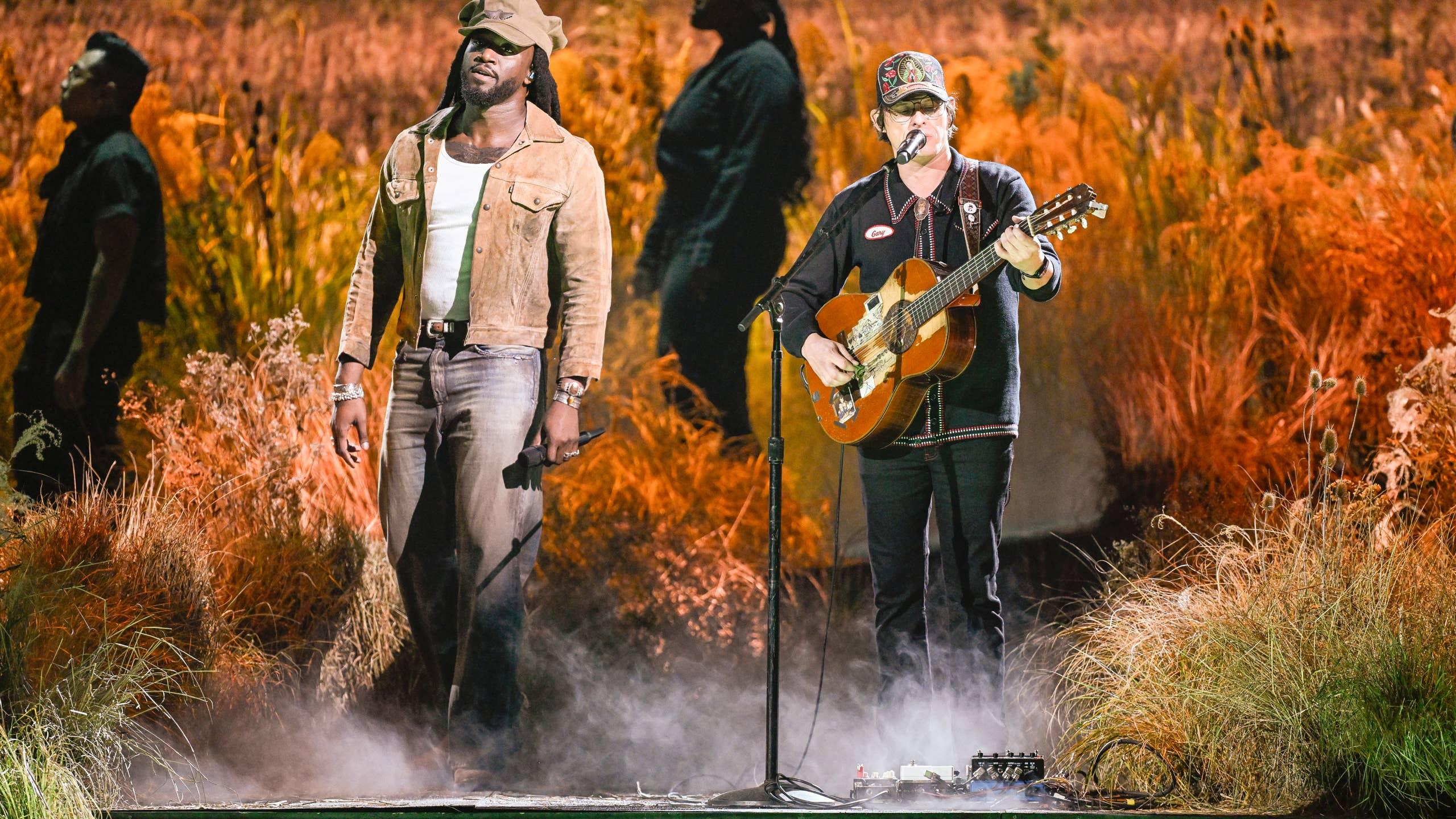
And the performances demonstrated why their success remains deserved. Stapleton’s collaboration with Wilson Jr. on “I’m a Song” was particularly moving, while the ceremony’s recognition of Brooks & Dunn offered a reminder that longevity and musical influence remain important parts of country music’s identity. The argument isn’t that the men have stopped producing worthwhile work; it’s that women are demonstrating an increasingly expansive version of what a country music career can become.
Look at the different forms of influence represented by the evening’s leading women. Langley achieved a historic sweep across performance, songwriting, recording, and entertainment, while Lambert exercised authority behind the scenes. Wilson commanded the broadcast as host, Musgraves maintained her distinctive artistic identity, and Swift returned with an international career that had long since outgrown the traditional boundaries of country music.
Those aren’t five examples of women succeeding in exactly the same way. They’re five different definitions of success, each challenging the assumption that country music stardom must follow one established career path. And that’s where the industry’s traditional model begins to look a little restrictive.
Country music has long celebrated male artists for authenticity, longevity, and their ability to represent a familiar musical tradition. Women have frequently been expected to satisfy those standards while also navigating additional scrutiny over their appearance, relationships, age, and perceived marketability. The most successful women aren’t necessarily rejecting country traditions; they’re demonstrating that authenticity doesn’t require artistic confinement, and commercial ambition doesn’t automatically diminish credibility.
That said, one awards ceremony isn’t proof that women have overtaken men in country music’s streaming, touring, radio, or executive leadership. Those are different measures of power, and the genre’s broader inequalities haven’t disappeared simply because one artist enjoyed a historic evening. The more persuasive argument is that women are creating career models that don’t depend exclusively on any one of those institutions.
A songwriter can become a producer, a singer can become a business owner, and a country star can become a global pop phenomenon without pretending her Nashville beginnings never happened. The men aren’t suddenly irrelevant, and their achievements deserve recognition. The women are simply making the definition of relevance considerably more interesting.
The CMAs Might Finally Be Finding Their Footing. And It’s About Damn Time.
Awards shows have an almost impossible job. They’re supposed to honor artistic achievement, entertain television audiences, satisfy industry executives, celebrate legends, introduce new talent, and somehow finish before everyone watching begins reconsidering their life choices. The CMAs have an additional challenge because country music is a genre that takes its history very seriously, sometimes perhaps a little too seriously.
There’s nothing wrong with celebrating tradition, particularly in a genre whose identity has been shaped by generations of influential performers and songwriters. The problem comes when tradition becomes an excuse for treating newer artists like uninvited guests at somebody else’s family reunion. An anniversary ceremony that spends too much time celebrating yesterday risks making today’s performers look like supporting characters in their own industry.
And that’s why the 2026 ceremony felt more promising than another anniversary broadcast built entirely around nostalgia. The Dolly Parton tribute acknowledged one of the genre’s most influential figures, Brooks & Dunn received recognition for decades of achievement, and Taylor Swift returned to celebrate her beginnings. Meanwhile, collaborations involving Lambert, Musgraves, Langley, Stapleton, and Wilson Jr. demonstrated how country music’s past and present can occupy the same stage without competing for attention.
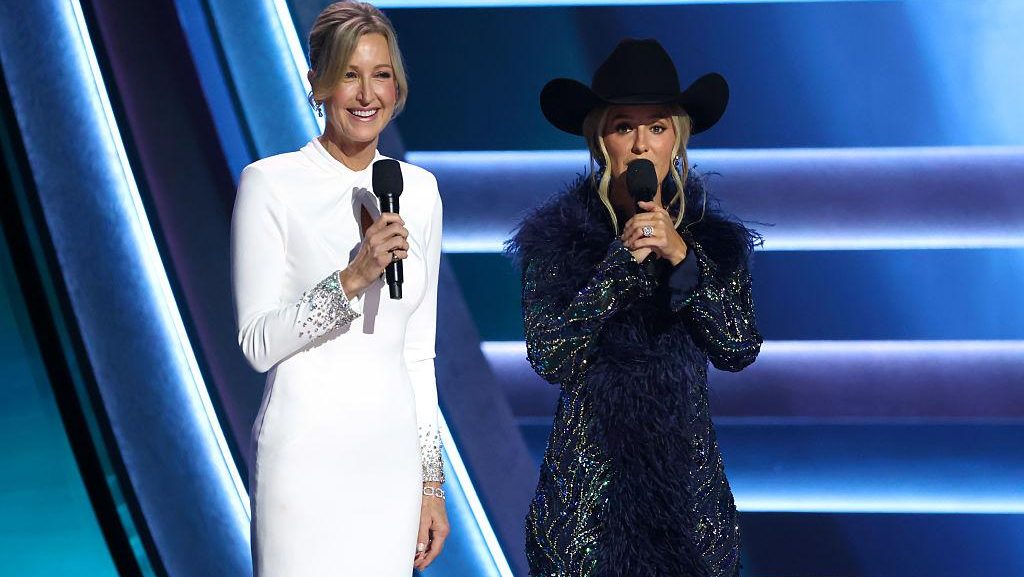
Langley’s historic sweep also gave the ceremony a contemporary storyline that didn’t depend on a retrospective montage. And Lainey Wilson, hosting for the third consecutive year, provided a familiar presence capable of connecting the different generations represented throughout the evening. The result was an anniversary show that seemed genuinely interested in what country music is becoming, rather than simply reassuring audiences that everything they loved 30 years ago is still wonderful.
That balance matters because the best awards shows aren’t simply celebrations of what an industry used to be. They’re arguments for why audiences should care about what it becomes. Country music has spent years negotiating the tension between its traditional identity and an increasingly varied collection of artists, sounds, and audiences, sometimes with all the diplomacy of a family Thanksgiving where nobody can agree on who gets to carve the turkey.
The 60th CMA Awards weren’t flawless, and no ceremony involving this many performers, presenters, acceptance speeches, and commercial breaks could possibly be. But perfection wasn’t the point, and the show demonstrated something more valuable than a completely seamless broadcast. It demonstrated a sense of direction, one that recognized country music can embrace change without treating its history as something embarrassing.
Perhaps the CMAs aren’t losing their identity by embracing the genre’s changing landscape. Perhaps they’re finally remembering that country music’s identity has always been changing. And perhaps recognizing the artists who will define its next chapter is the smartest anniversary present the institution could have given itself.
Why Country Music’s Women Aren’t Going Anywhere

It’s tempting to look at Ella Langley’s six trophies and declare that women have officially conquered country music. That would make a wonderfully dramatic headline, but it would also miss the larger story. One awards ceremony cannot erase decades of structural inequality, and the continued success of male performers means the genre’s future is unlikely to belong exclusively to anyone.
The reason women are positioned to remain influential isn’t simply that audiences are finally recognizing their talent. It’s that successful female artists are increasingly building the infrastructure that allows influence to continue beyond a single album cycle. They’re writing songs that other artists record, producing albums, developing audiences that follow them between genres, and establishing professional relationships that help the next generation succeed.
They’re also demonstrating that there isn’t one correct way to be a female country artist. Dolly Parton built an empire without surrendering her personality, Taylor Swift transformed Nashville’s storytelling traditions into a global phenomenon, and Miranda Lambert has extended her influence beyond the stage. Lainey Wilson, Kacey Musgraves, and Ella Langley are showing that contemporary country music has room for different sounds, personalities, and ambitions.
None of those achievements guarantees that every woman entering the industry will receive the same opportunities. The real test will be whether radio programmers, record labels, festival organizers, producers, and executives create opportunities for more women, not just the exceptional few who manage to become impossible to ignore. There’s a difference between celebrating female success and building an industry in which it can become ordinary.
And perhaps that’s what made the 2026 CMA Awards feel different. For once, the women weren’t merely being acknowledged as important figures in country music’s history; they were visibly participating in the decisions, performances, collaborations, and achievements that will shape its future. The men weren’t disappearing, the traditions weren’t being abandoned, and country music wasn’t suddenly becoming something unrecognizable.
It was becoming bigger, and that expansion should be exciting for anyone who cares about the genre’s future. Dolly Parton spent a lifetime proving that women could write the songs, own the business, and make the rules, while Taylor Swift demonstrated that those rules didn’t have to stop at the Nashville city limits. Ella Langley just walked away with six awards suggesting the next generation has been paying very close attention.
Country music’s women aren’t taking over because the men stepped aside. They’re taking over because they stopped waiting for someone to move. The CMAs may finally be realizing that recognizing female influence isn’t a concession to changing times; it’s an acknowledgment of the artists helping define them. And if the 2026 ceremony proved anything, it’s that the industry might finally be smart enough to follow their lead.


