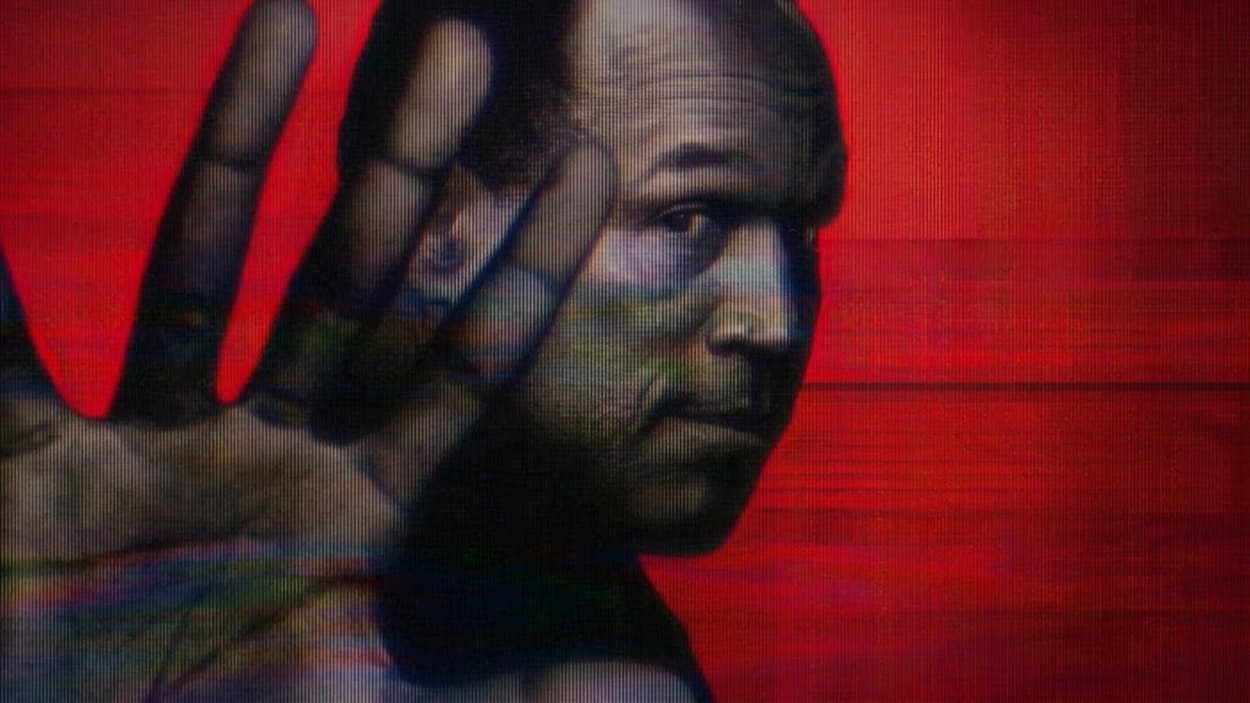
A new Discovery Channel docuseries, O.J. Unseen: Exploitation of Evil ‘exposes’ the attempt by a shock jock producer to capitalize off the infamy of O.J. Simpson. However, it begs the question if adding sinister music, after-the-fact interviews, and other true crime documentary trappings represents any kind of fundamental difference? Still, it stands as a reminder that more than 30 years after “The Trial of the Century” the public has yet to get its fill of the Brown and Goldman families’ tragedy as entertainment.
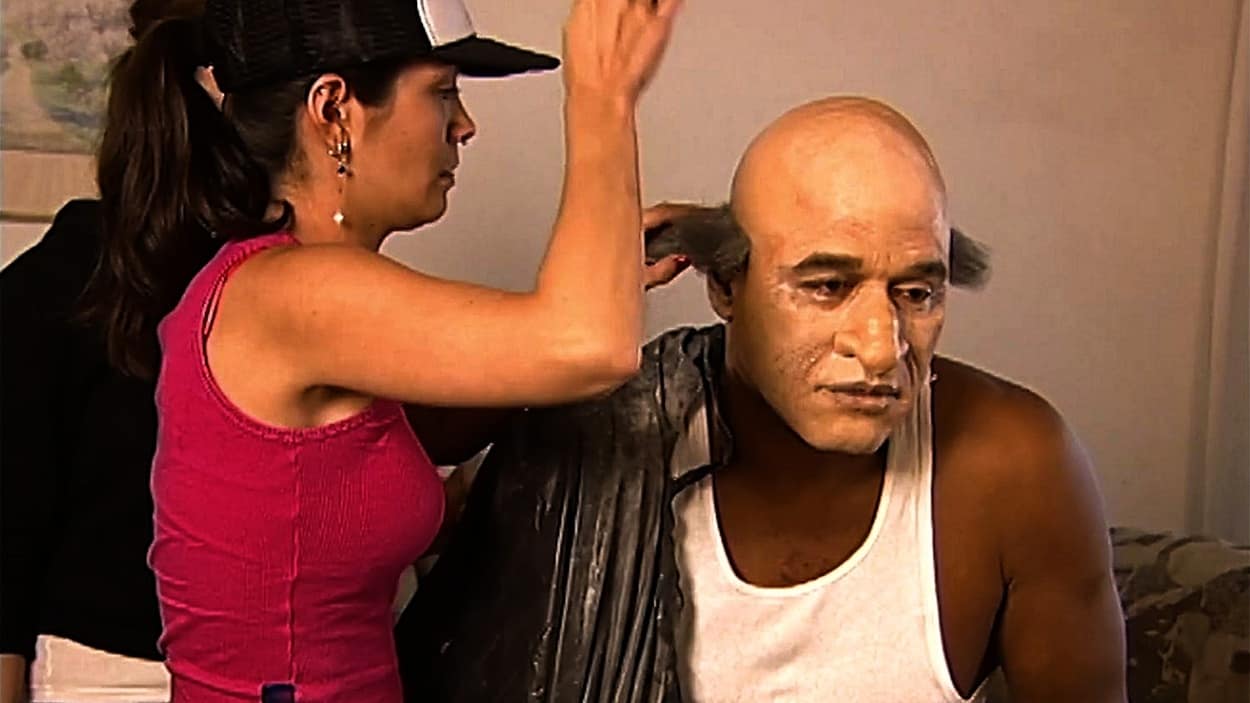
That I’m reviewing this series at all is perhaps my own attempt at absolution for clicking “play” on HBO Max when I saw the title card. I was 14 years old when the entire country flocked to their TV sets to watch Al Cowlings drive O.J. around in that White Bronco. I was 15 when, in the middle of science class, a TV was wheeled into the classroom so we could all watch the verdict live. Outside of the behind-the-scenes footage, O.J. Unseen shows the public nothing new about its infamous subject.
The Discovery Channel Exploits Evil Regularly, So O.J. Unseen Is Right At Home
The job of any reviewer is to let their readers know if a show or film is worth watching by using their own opinion of the work as a foundation. So, to be completely up-front, I loathe the “true crime” genre. I find it exploitative and unseemly, and Discovery Channel is particularly a frequent offender in that regard. During my 20 years as a journalist covering current events, I often worked the criminal justice beat. There is a fine line between informing the public and exploiting these tragedies for others’ entertainment. One key factor absent in O.J. Unseen is that it reports nothing new of relevance about its subject. Those who believe O.J. was guilty will have their feelings confirmed. Those who feel he was an innocent (if troubled) icon driven crazy by his destroyed reputation will as well.
Other than journalist Harmon Leon, whose exposé about Juiced killed the project, the most honest person in the documentary is Rick Mahr. He made his entertainment name by producing Backyard Wrestling and other violent and sexualized DVDs in an era when those were popular. They were morally bankrupt videos of humanity at their worst, packaged as gonzo, rock-and-roll media. He “greenlit” Juiced, the ill-advised “prank show” starring O.J. for the same reason he participated in the documentary. He knew people would watch. (And I suspect he was also paid well for the footage which serves as the backbone of this documentary.)
For those of us old enough to remember when O.J. was a beloved celebrity athlete and actor, it may seem like a compelling new chapter of this man’s life caught on film. But, for me at least, this feels like a dressed-up version of the same bad judgment that led Mahr to greenlight the show in the first place. That it’s a documentary does little to alleviate the exploitative nature of finally releasing this footage for an audience. Director Rebecca Halpern intersperses clips from news reports and the trial into the documentary, as if we need to be reminded of it. Even the Juiced shock jock production crew would have never dared do that, and it’s unclear what it adds to the subject.
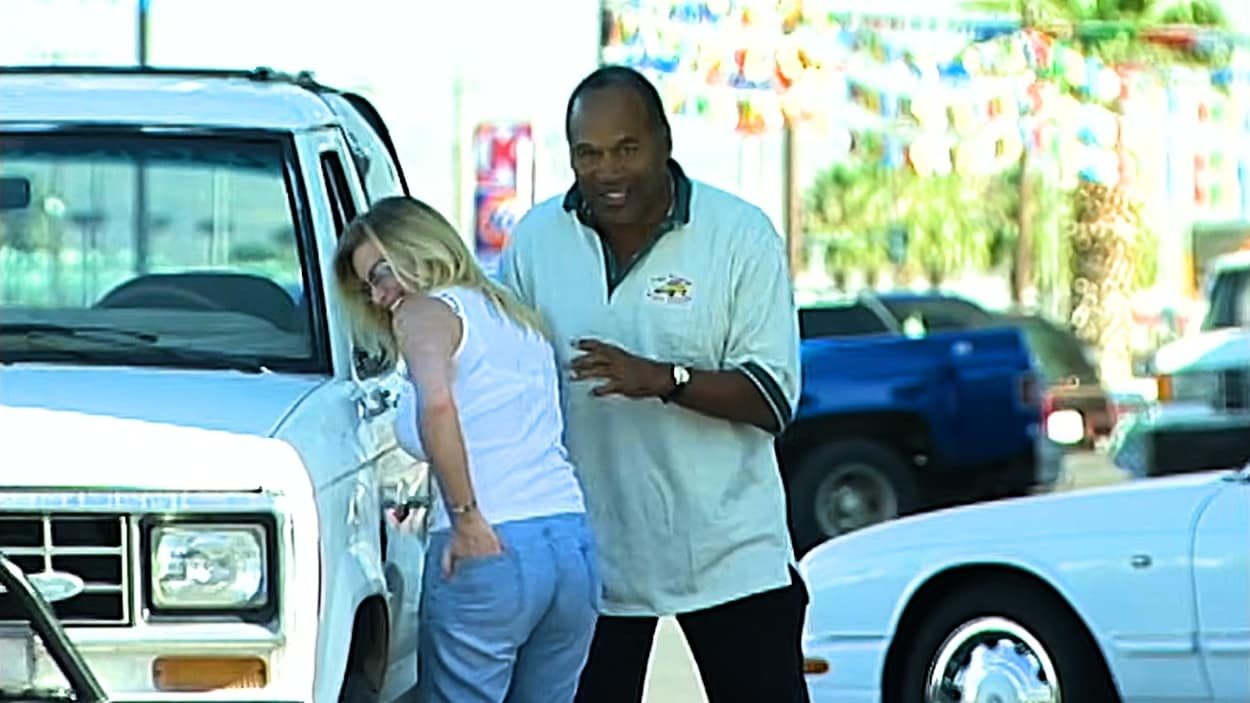
Given that O.J.’s explosive temper led him to violently confront a sports memorabilia seller and serve nine years in jail for armed robbery, the prank show goes exactly as one would expect. It was a disaster and, with much of the footage involving young women as prank victims, uncomfortable to watch. It also does nothing to touch on the racial side of O.J.’s story, even with journalist Jemele Hill among the talking heads. We learn nothing new about him or the deaths he was found liable for by a civil jury in 1997. I have watched and found value in documentaries about the trial itself or even the season of American Crime Story that dramatized it. O.J. Unseen is the first one I’ve ultimately regretted watching. Fans of true crime or those fascinated by candid footage of frightening people possessed of a certain emotional darkness will certainly find what they are looking for. It’s something I’m never interested in.
O.J. Simpson Is A Unique Cultural Figure, And His Alleged Victims Have Never Gotten Justice
Coincidentally, my interest in journalism, specifically both criminal justice and entertainment, began in earnest in 1994. With a brand-new PC and a my first writing job for AOL (where I was paid with free, unlimited internet), I was already starting my career. So, there has always been a journalistic element to my personal fascination with this dark, tragic case. Because I am old enough to remember when O.J. Simpson was the kind of athlete that left everyone in awe, even if he didn’t play for my beloved Steelers. I remember him as a charismatic and affable media personality and, in the Naked Gun films, actor. He was never my “hero.” That title belongs, then and even now, to spacemen and superheroes. But he was a superstar I liked just the same. In 2016, coincidentally just before my pivot from news to full-time entertainment coverage, the one-two punch of O.J. Made In America and The People v. O.J. Simpson reawakened my fascination in earnest.
In 1994, I was one of the minority of white folks (in my neighborhood, at least) certain of O.J.’s innocence. Everything I went on to learn about the cops and the courts only affirmed for me the allegations from that trial that coined the term “playing the race card” were grounded in truth. In 2016, I studied the trial far more deeply than I did when it was on Court TV everyday. I also had a much better understanding of the criminal justice system after covering it for more than a decade. This wasn’t just a whim, either. I planned to write a literary nonfiction book based on both my memories of living through this cultural moment and also sober, retrospective reportage. I ultimately abandoned this idea because I realized enough people profited from Nicole Brown Simpson’s and Ron Goldman’s murders. Whatever I could add to the conversation was not important enough that I could justify contributing to the continued exploitation of their ghosts.
I became convinced he committed those murders (and this was before the 2006 interview with Judith Regan that debuted in 2018 came out). Alas, I am also certain the jury’s verdict was the legally correct one, particularly reading transcripts of discussions with the defense, prosecution, and Judge Lance Ito in his chambers that were not immediately made public. Simpson’s guilt is painfully obvious. Nonetheless, the LAPD has a long history of systemic racism. Investigators and Prosecutors utterly botched their case, through both arrogance and ineptitude. The jurors could only evaluate facts submitted into evidence. Given that limitation, the prosecution unquestionably failed to prove O.J.’s guilt beyond a reasonable doubt. Yet, the trial’s legacy is not about the way the system and press coverage failed a known victim of domestic abuse or the homebound roosting chickens of corrupt and biased criminal justice institutions in L.A. It’s still about Simpson’s celebrity, the media spectacle, and how all that made us feel. So, perhaps my sense of regret after watching O.J. Unseen has more to do with my own relationship to O.J. and the trial than what passes for substance in this documentary.
This story should not primarily be about a beloved American icon accused of a crime. It’s about Nicole Brown Simpson, a woman who suffered abuse that likely ended with her death. It’s about Ron Goldman, an innocent bystander and still the subject of salacious assumptions about his relationship with her that never mattered in the first place. Sadly, both in 1994 and today, all we talk about is O.J.: a superstar who was either a victim of a broken system or the beneficiary of the privilege that comes with money and fame. All this contributes to my extreme distaste for O.J. Unseen, because his alleged victims are once again relegated to mere props in a study of a fall from grace. Those who remain fascinated by killers (or just the idea of seeing O.J. suffer) will get what they want from this documentary. Those of us who yearn to look back on a tragedy which captivated the culture to find some measure of meaning? Like most everything else on the subject, O.J. Unseen leaves us desperately wanting. For my money, there are many better television shows far more worthy of viewers’ time.
Rating: 1/5
O.J. Unseen: Exploitation of Evil is currently streaming on HBO Max.


