
Heaven is a Wishy Washy Laundromat today. Dolly Parton, 80, of Sevier County, Tennessee and the softest part of America’s heart, has died.
Born to Robert Lee and Avie Lee (Owens) Parton on January 19, 1946, Dolly Rebecca Parton was the fourth of twelve children raised in what polite company calls a humble upbringing deep in the Smoky Mountains of East Tennessee. Preceded in death by her parents, six of her siblings, and her husband of nearly 60 years, Carl Dean, her nephew states in a heartfelt, simple message on her social media accounts that she will surely be met by all her loved ones in Heaven. She’ll probably find them a little sunburnt, on the sidewalk outside the Wishy Washy Laundromat in Nashville, where she met her husband.
Dolly Parton Was an American Treasure
Absolutely covered up with awards (11 Grammys, a Primetime Emmy, two Academy Awards, a Tony, and six Golden Globes) and Honors (the National Medal of Arts, 2024 Kennedy Center Honors, Grammy Lifetime Achievement Award, and the Jean Hersholt Humanitarian Award), Dolly was undeniably a force– of art, of nature, of business.
But, before she was the Queen of Country Music (and Film, and Philanthropy, and Humor, and Cracker Barrel), she was a little girl who sat at her mother’s feet to be entertained with Appalachian folk tales and songs, ported over and shaped by the family and region’s Welsh, Scottish, Irish, and generally Hebridean heritage. In spite of her Pentecostal upbringing, her grandfather, an old-time preacher of both brimstone and salvation, Dolly was encouraged, alongside her siblings, to make joyful noise in celebration of life, their relationship to God, and one another.
These early immersions in storytelling, mountain music, and communal gathering proved a strong theme throughout her life. At 13, she recorded the bubblegum pop single “Puppy Love,” and quickly found success as both a singer and songwriter, writing many songs for herself and others like Hank Williams Jr. and Skeeter Davis. In 1959, still only 13, she would perform at the Grand Ole Opry and meet Johnny Cash, who gave her the advice to always follow her own instincts.
An entire cultural treatise could be written on all that came after: Porter Wagoner, Trio, Dollywood, the movie 9 to 5, “Jolene”, infamously turning down Elvis’s request to record “I Will Always Love You,” losing a lookalike contest, the Christmas specials, the Variety shows, the makeup, the product lines, the butterflies. There are few things in this world untouched by Dolly Parton, and they are likely the less for it.
Dolly Parton Is Gone, But Her Legacy Is Eternal
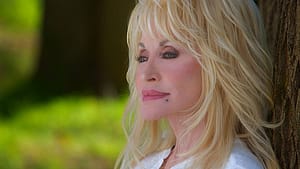
Often seen as an outlier to her culture by the broader world, Dolly Parton was, in actuality, a poignant example of it.
Outside of songs that outlined her experiences with poverty (“Coat of Many Colors,” “Hard Candy Christmas”), isolation (“Joshua”), and rural life (“Applejack”), Dolly was equally vocal about her opinions on social matters like modern womanhood (“9 to 5,” “Just Because I’m a Woman,” “Backwoods Barbie”), cultural division (“World on Fire”), and inclusion (“Family,” “Travellin’ Through”).
It is so important that when we remember this icon of icons, we also remember that all of these themes– all of her warm stories of drag queens, farmers, women of ill repute, men in tight jeans, and those infamous quick-witted, whip-smart quips are because of her upbringing along the Little Pigeon River in rural Tennessee, rather than despite it. She was, and will forever be, a shining example of all the best parts of Appalachia and rural America: community, perseverance, and authenticity.
Click the link to donate to Dolly Parton’s Imagination Library


One Comment on “Dolly Parton, An Elegy In Tennessee Homesick Blues”