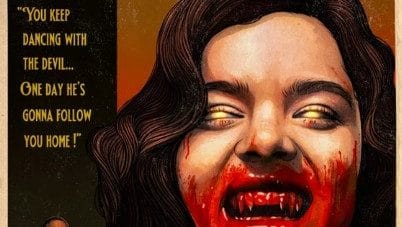
So, I very rarely branch out from what I know (I’ve re-read every book I love over 30 times; I have issues, I’m aware lol)… But I decided to take a chance, and Sinners was free, so I thought, “F**K it, let’s see what the hype’s about!”… and WOW.
This reminded me of why movies were made: the magic of the entire movie, not just scenes. And I couldn’t stop coming back to the one question: when the hell did movie scores stop being part of the movie?
Not technically part of it. Obviously there is still music playing while people run, cry, kiss, perish, stare dramatically out windows, BROOD (looking at you, Twilight), or whatever. I mean one of the best parts of a movie is how you could hear 5 seconds of a score/song, and you’re automatically put right back into the movie, which is really special… and exceedingly rare today.
This reminded me of the scene in The Holiday (a great rom-com from Nancy Meyers, so if you haven’t seen it, that’s your bad lol) that turns this into an entire joke. Jack Black is standing in a Blockbuster (it used to be this place where you’d go and rent a VHS and sometimes, they didn’t have the VHS, and you had to WAIT), basically playing “name that movie score” with Kate Winslet.
He literally hums a few notes, and that’s it. Kate Winslet’s character knows the movie right away, but, more importantly, we know the movie. We also get an amazing cameo from the notoriously grumpy Dustin Hoffman: while Jack Black sings Mrs. Robinson from The Graduate, Hoffman is standing right there looking visibly annoyed, which makes the whole thing even better.

Also, The Graduate is technically kind of a pain in the ass for the whole “score versus soundtrack” argument because Simon & Garfunkel are so completely tied to the movie, while Dave Grusin also provided original instrumental music, so that’s a fun argument to have with my composer nerd friends lol… however, it actually helps the point: you hear the music, you know the movie.
No one is stopping the scene to conduct a forensic investigation into whether what you’re hearing technically qualifies as score, soundtrack, existing song, original composition, or whatever else somebody wants to yell about in the comments.
And sure, maybe I sound like an old lady telling the neighborhood kids to get the hell off her lawn, but I remember when certain scores were so irrevocably tied to the movie itself that NO ONE needed lyrics, a title card, or someone whispering in their ear, “This is from Forrest Gump.”
Forrest Gump.
Home Alone.
Titanic.
Indiana Jones.
Back to the Future.
Jurassic Park.
Beetlejuice.
Chariots of Fire.
The Girl with the Dragon Tattoo.
The Sixth Sense.
Up.
The Incredibles.
The Graduate.

These are not even remotely the same kinds of movies, or even in the same genres (for MOST OF THEM), which is kind of my point: you hear the music, you know where you are.
And after years of extremely lazy musical scores, Sinners FINALLY brought back the magic of what movies were meant to be.
It’s amazing how Ludwig Göransson’s score does not just sit underneath Ryan Coogler’s movie and wait for its cue to tell us, “Okay, now be scared.”

(Side note: I LOVE that Coogler is the director of these movies… he doesn’t fit the optics of someone who’d make Creed or Black Panther, but damn, that man knows what he is doing every step of the way!)
Getting back on track, the music is part of the entire damn structure. The blues matters, the juke joint matters, Sammie definitely matters, the religion matters, the family matters, the history matters, the temptation matters, the grief, the joy, etc… then, because Ryan Coogler looked at all of that and thought it still needed a little something, we got f**king VAMPIRES (again, Twilight must be sooooo pissed lol).
But the vampires don’t take anything away from the music; I’d argue they make the importance of the music even clearer, because the score isn’t there for pure decoration…
The music IS the story.
That juke-joint sequence makes that impossible to ignore… also, I Lied To You is f**king fantastic as a stand-alone song, but hits the scene so hard. The past, present, and future collapse into each other through Sammie’s music. Many of them are generations that could never exist in the same room, but because of Sammie’s music, they’re invited to — which is especially important in a movie where the vampires literally need to be invited in, because even the supernatural rules are reinforcing the damn point. The music has connected them… for better or worse.
This scene is particularly important, because it proves the movie does not work because the score is good; it works because the music is carrying the entire idea.
And there’s a HUGE difference.
The movies haven’t lost the talent (although I’d beg to differ there lol), or the composers, or good music — movies have lost their identity.
Because the talent of the composers is still there:
Trent Reznor and Atticus Ross made The Girl with the Dragon Tattoo feel cold, ugly, abrasive, and completely tied to that world, WHILE creating a badass remix of Immigrant Song… James Newton Howard gave The Sixth Sense that delicate, eerie feeling that basically tells you from the beginning that something is wrong… and the score remains consistent, so the audience just knows.

Michael Giacchino can use Up to emotionally ruin your entire day in about four minutes, but then he tricks you by scoring The Incredibles, making a score that sounds like a giant retro spy movie. Many people wouldn’t even guess Giacchino scored both (they’d probably just assume it’s Randy Newman, which is fair lol)…
It’s not the composers who are the problem… it’s the fact that most modern scores feel like they belong to fifteen different movies with zero cohesion.
Sure, they work, but it’s so repetitive — same notes for terror, same notes for joy, blah, blah, blah… but do they belong to that movie?
Could you hear five seconds of it three years later and know exactly how MANY movies have reused that song? Or name the movies, not just be like, “Dammit, I KNOW this, but cannot think of it!”, because that’s not knowing s**t.
Now, half the time, that’s where my brain goes.
Not:
“Oh, that’s from THIS.”
More like:
“Wait, didn’t I hear this in three trailers, a Netflix show, and something starring Chris Pratt (barf)?”
That is not the same thing.
And one of the reasons scores can end up feeling so interchangeable is temp music.
Editors cut scenes using existing tracks before the final score is written, everybody gets attached to the placeholder, and then the composer gets handed the deeply stupid assignment of:
“Make something completely original.”
“Great.”
“But make it sound like this.”
Fantastic.
No notes.
Actually, MANY notes. That’s the problem.
If every thriller is chasing the last thriller, every superhero movie wants the last superhero movie, and every sad scene gets the same emotional swell, you can still end up with perfectly competent music, but it doesn’t sound like anything.
A great example of movies that refuse to feel musically generic is basically anything done by the Coen Brothers… Inside Llewyn Davis is amazing, and T-Bone Burnett produced it, so sorry, Marvel, they’ve edged out your “We’re SUPER HEROES!” scores. They’re stale, boring, and, frankly, turn me off from liking the movie.
Sinners sounds like Sinners, and that’s the major difference.
You could not take Göransson’s score, drop it into some other horror movie, and pretend nothing changed. You cannot separate it from Mississippi. You cannot separate it from Sammie. You cannot separate it from the juke joint. You cannot separate it from what the movie is saying about music, belief, race, religion, community, exploitation, temptation, grief, violence, and memory.
It belongs there.
And the older scores I remember most did the same thing…
Home Alone does not feel like Home Alone without John Williams.
Take Alan Silvestri out of Forrest Gump or Back to the Future and those movies lose part of their emotional language.
Take Vangelis away from Chariots of Fire and congratulations, you now just have some extremely committed people running on a beach, in arguably too-short shorts.
Even something like Beetlejuice works because Danny Elfman’s score is so completely in step with that movie’s weird little brain… and fits scoring that genre perfectly (The Addams Family, HELLLLOOOO).
Then there’s Titanic, which I am absolutely bringing up because James Horner and Céline Dion basically pulled one over on James Cameron, who really can suck it at this point lol.
Cameron did not want some giant pop ballad attached to his Very Serious Boat Movie, which NONE OF US knew how it ended… but Horner disagreed.
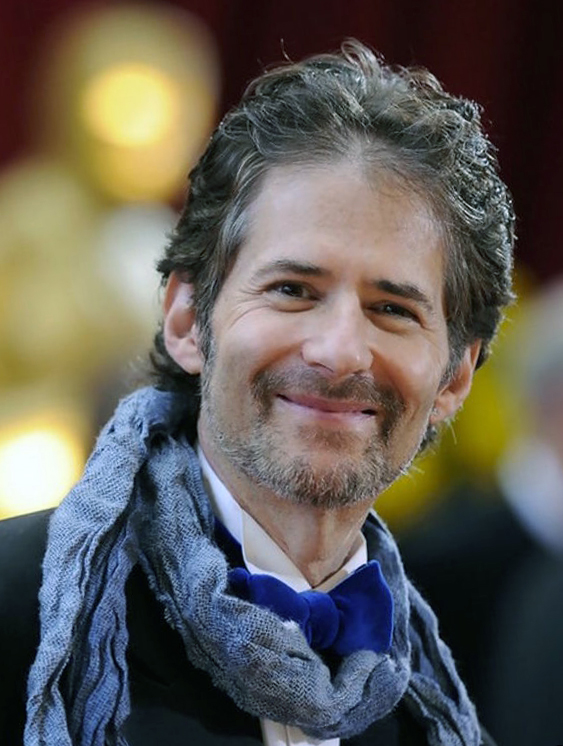
So he and Will Jennings wrote “My Heart Will Go On,” Céline Dion recorded it, and Horner basically waited until it existed before letting Cameron hear it, which is f**king hilarious to me… imagine being James Cameron — director, control freak, future King of the World — and your composer and Céline Dion essentially go:
“Yeah, okay, Jim,”
then make the song anyway, and it becomes one of the most recognizable movie songs ever… when Cameron wanted NO lyrics in any score for that exact reason.
So, ya, I quite enjoy one getting pulled over on Cameron…
And yes, “My Heart Will Go On” is a song, not the score, which is exactly why Titanic works so well as an example. It had both. The song blew up, but Horner’s score itself also became inseparable from the movie.
That’s what I truly miss: a score that feels like the movie could not exist in quite the same way without it.
That is what Sinners does.
The score has history, danger, joy, sex, religion, violence, racism, grief, superstitions, memories, and something to say.
I don’t think Göransson proved that composers still know how to write music, because they obviously do, but Sinners and Göransson proved what happens when a filmmaker lets a score become part of the movie’s identity instead of treating it like emotional wallpaper.
We don’t need bigger, louder, franchise-based themes we’re going to hear a billion times, not even counting the spin-offs while buying overpriced popcorn.
I want music that belongs to the movie, that tells me where I am before anyone says a word… music that I hear years later and immediately remember how the movie felt.
Sinners didn’t reinvent the movie score, but it reminded me why I used to give a shit about one.
Love, K


One Comment on “Why the Hell Don’t Movies Sound Like Themselves Anymore?”