**THIS POST CONTAINS SPOILERS TO THE SIXTH FACTION AND FULL DIVERGENT SERIES & FILMS**
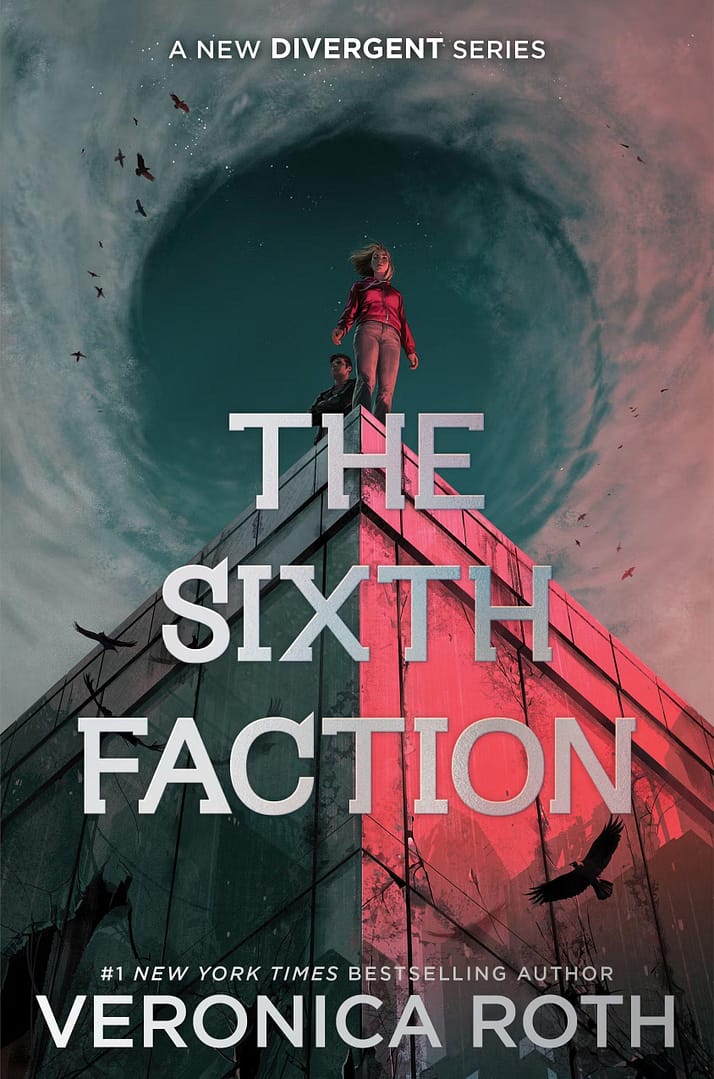
 Fifteen years after Divergent introduced readers to a society that divided humanity into five personality traits — essentially the world’s most aggressive Myers-Briggs assessment — Veronica Roth has returned to dystopian Chicago with The Sixth Faction. The premise is intriguing: What happens when Beatrice Prior’s carefully planned future collapses before she can choose Dauntless? It’s an opportunity to challenge familiar relationships, reconsider the faction system, and explore the people its supposedly virtuous society abandoned.
Unfortunately, The Sixth Faction sometimes seems so determined to complicate Divergent that it forgets what made the original compelling. Familiar characters become strangely unrecognizable, political allegiances grow difficult to follow, and a society once defined by its brutal rules feels considerably less dangerous. Roth’s ambition is evident, and there are genuinely interesting ideas beneath the reimagining. But the question isn’t whether Divergent needed fixing. It’s whether these changes have made anything better.
Familiar Names Don’t Guarantee Familiar Characters
The Sixth Faction begins with a promising disruption. Tris intends to leave Abnegation for Dauntless, but a factionless uprising interrupts the Choosing Ceremony. A glimpse of someone believed dead raises questions about the people closest to her, and the discovery that her father intends to interfere with her memories sends her toward the very outsiders her society has rejected.
It’s an effective premise for an alternate reality. The difficulty is how quickly the new arrangement takes shape.
Within the opening chapters, the novel establishes so many altered relationships and circumstances that its departures from the original can feel less like discoveries than instructions. Rather than gradually introducing readers to a different version of this world, Roth asks them to accept a substantially rearranged one almost immediately.
Alternate-universe fiction should change the familiar. That’s rather the point. But those changes still need to feel earned.
Tris Has Lost Some of the Independence That Made Her Compelling
Tris suffers most from the comparison. The original heroine was stubborn, impulsive, courageous, and frequently spectacularly wrong. She wasn’t an effective female protagonist because she always made the right decisions. She was compelling because she made consequential decisions, even when they were disastrous.
This version feels more reactive. Circumstances and revelations increasingly dictate her direction, diminishing the independence that once defined her.
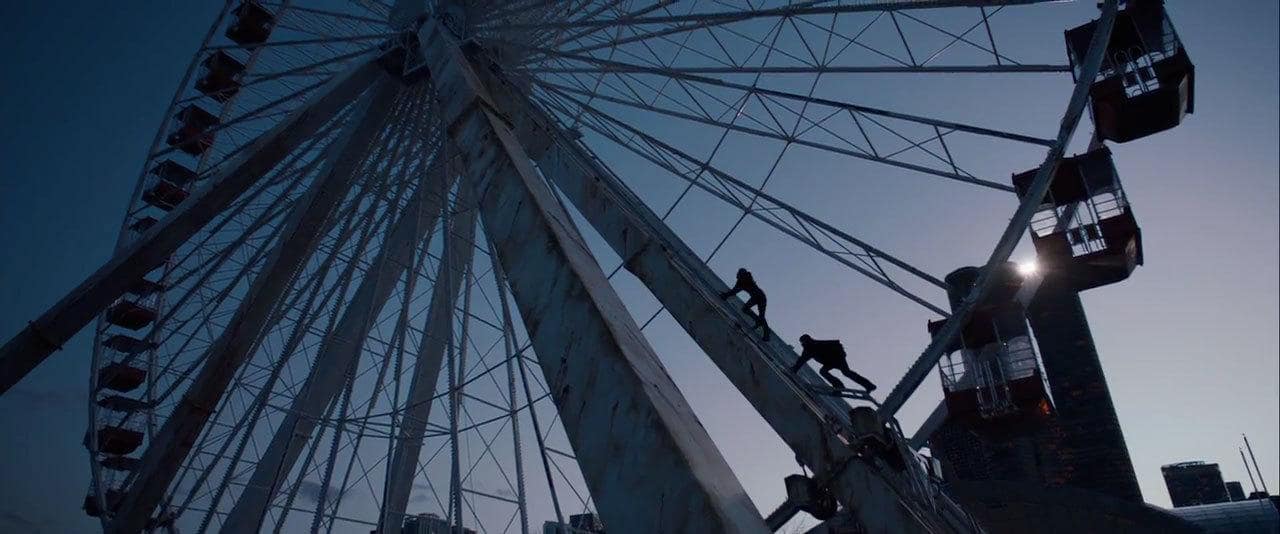
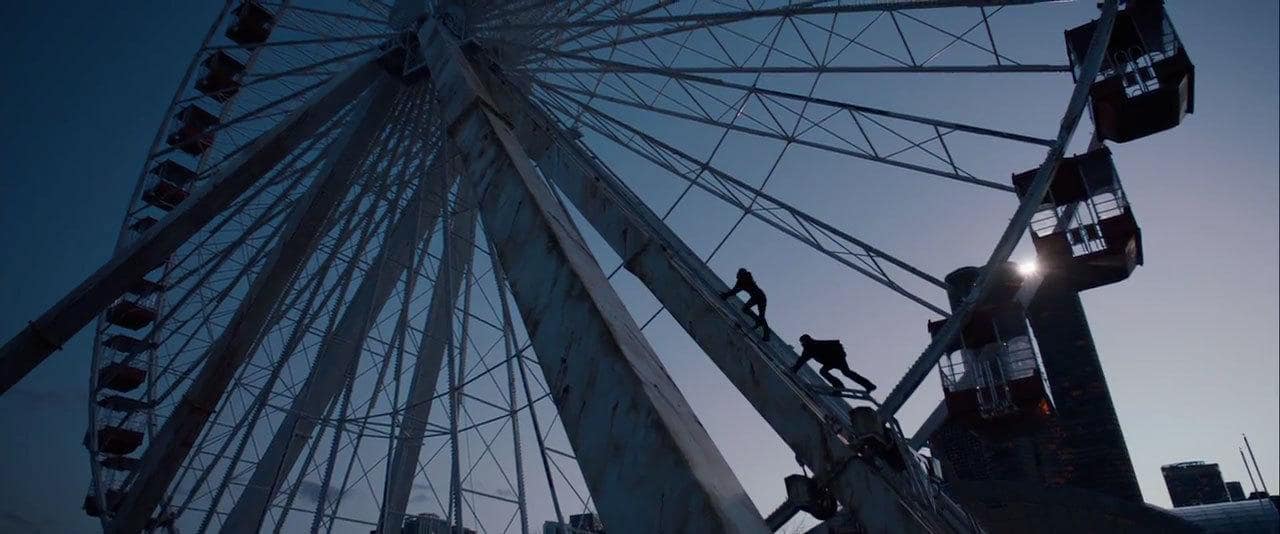
The difference becomes especially apparent when Roth returns to one of Divergent‘s most memorable locations: the Centennial Wheel at Navy Pier.
In the original novel, the Ferris wheel sequence is far more than an exciting set piece during Dauntless’s capture-the-flag exercise. Tris’s ingenuity helps her locate the opposing team, demonstrating that her greatest strength isn’t simply her willingness to take risks. It’s her ability to think creatively under pressure.
She also discovers something revealing about Four, her instructor, when his fear of heights becomes apparent. For someone whose identity revolves around overcoming fear, the moment introduces a vulnerability that makes him more interesting than another intimidating Dauntless authority figure.
And then there’s the tension between them.
Shared danger, small discoveries, and the gradual recognition that neither is quite what the other expected build their growing familiarity. The scene doesn’t need exposition or a convenient declaration that they’re becoming close.
It accomplishes several things simultaneously: it develops Tris’s independence, reveals Four’s vulnerability, strengthens their connection, and advances the immediate conflict.

In The Sixth Faction, the return to the Centennial Wheel feels strangely hollow by comparison. Tris’s presence seems less purposeful, and the encounter lacks much of the tension and gradual discovery that made the original sequence memorable.
The location is recognizable. Its narrative function is not.
That’s the distinction the reimagining repeatedly struggles with. Revisiting a familiar moment should reveal something new about the characters or their circumstances. Here, the comparison draws attention to what has been lost.
The original scene gave Tris an opportunity to demonstrate who she was. The new one seems largely content to remind us where she is.
Caleb’s Intelligence Doesn’t Make His Choices Convincing
Caleb Prior offers an equally frustrating example, albeit for different reasons.
In the original trilogy, Caleb’s betrayal was infuriating precisely because he was intelligent enough to rationalize it. His allegiance to Erudite exposed the danger of mistaking intellectual superiority for moral authority. He wasn’t incapable of understanding right and wrong; he was capable of convincing himself that his choices served a greater purpose.
The Sixth Faction makes that distinction more explicit by giving Caleb his own point-of-view chapters. The Erudite labyrinth trial establishes that his intellectual abilities are very much intact. He can solve complex problems, navigate institutional expectations, and demonstrate exactly the sort of intelligence his faction claims to value.
What he seems increasingly incapable of doing is questioning the morality of the institution he’s so eager to serve.
He’s not simply a misunderstood young man whom others lead astray. His choices suggest someone increasingly committed to an ideology that excuses cruelty, even as the novel provides readers with direct access to his reasoning.
The contradiction could be fascinating: a character intelligent enough to recognize elaborate patterns but unwilling to examine the beliefs governing his own behavior. Instead, his devotion can feel almost absurdly unquestioning. He hasn’t lost his intelligence. He’s surrendered his judgment.
Making Caleb more morally reprehensible isn’t inherently a problem. But when readers can see inside his mind, the novel has a greater responsibility to make that descent psychologically convincing. Greater access to his thoughts should help readers understand his choices, even when those choices are indefensible.
Instead, his growing commitment to wrongdoing can leave him feeling less like a tragic intellectual and more like the smartest person in the room who has somehow never thought to ask whether he’s on the wrong side.
The altered characterization of Tris’s parents contributes to the same unease. Their behavior creates opportunities to examine the uglier implications of Abnegation’s selflessness, particularly when parental authority becomes indistinguishable from control. Yet the changes can feel so abrupt that the emotional complexity of the Prior family suffers.
Familiar names are present, but familiarity alone cannot supply the character development that made those relationships matter.
The Factions Have Lost Their Teeth
Roth has openly discussed wanting to revisit the original trilogy’s unstable worldbuilding. It’s a reasonable ambition. A civilization built around five supposedly defining virtues raises enough practical questions to keep a political scientist occupied until the next Choosing Ceremony.
The original books were hardly models of institutional realism. But they established something essential to effective dystopian fiction: consequences.
The factions governed where people belonged, how they behaved, and what happened when they failed. Becoming factionless meant losing the security and identity that society offered its members. The system was simplistic, oppressive, and unmistakably threatening.
The Sixth Faction approaches that system from the outside, placing the factionless much closer to the narrative’s center.
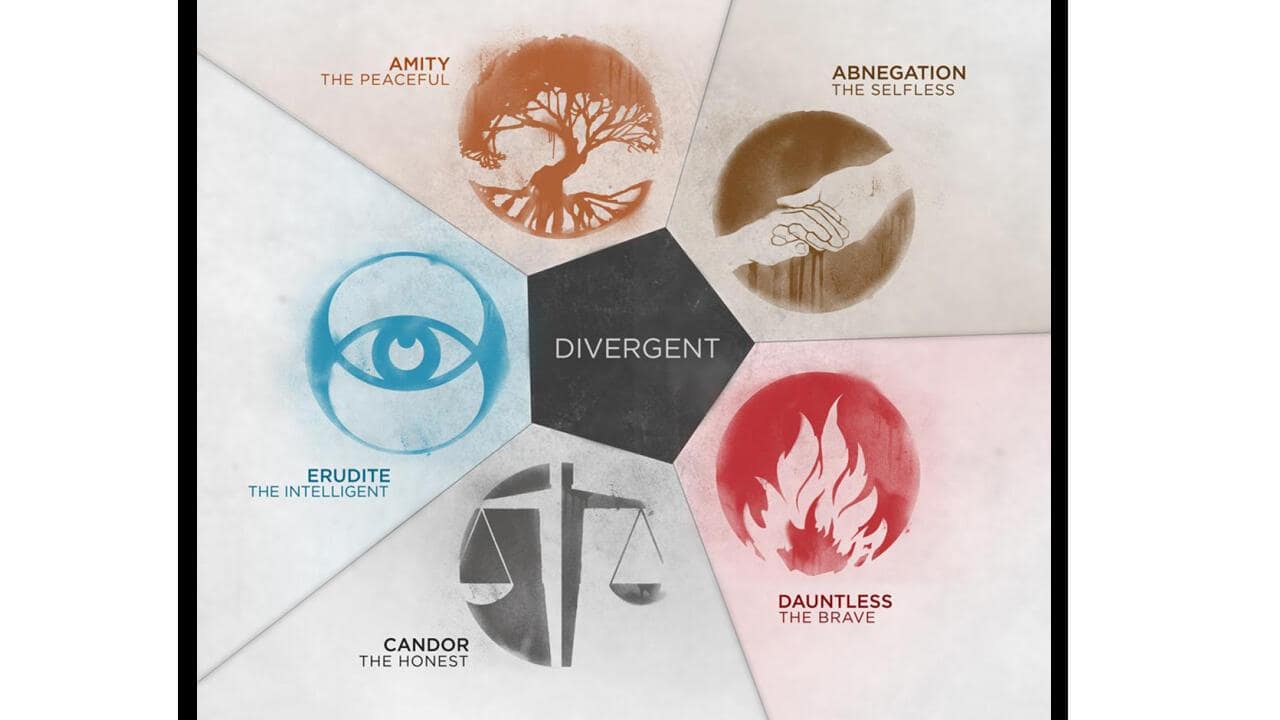
Conceptually, this should be one of its greatest strengths. The people discarded by an allegedly virtuous society are ideally positioned to expose its hypocrisy. They have every reason to challenge the institutions that insist exclusion is somehow compatible with morality.
But the perspective creates an unexpected problem: readers spend so much time learning about the factions through the factionless that the factions themselves feel insufficiently developed.
Rather than understanding the system more deeply, we’re left with an increasingly uncertain picture of how it operates. The boundaries between groups seem less distinct, their authority less consistently enforced, and their defining principles harder to identify in practice.
Most noticeably, the factionless appear able to move through society with a freedom that sits awkwardly beside the original trilogy’s harsh treatment of them.
An alternate timeline can absolutely change the balance of power. But the novel needs to establish the new restrictions convincingly if we’re supposed to fear their consequences.
This matters beyond continuity. Oppressive systems become frightening through the rules they enforce and the punishments they impose. If those boundaries are unclear, rebellion becomes harder to evaluate. What exactly are the characters risking? How much power do the factions actually possess? Why does this society sometimes seem less brutal when its underlying injustices remain?
Roth may have constructed a more elaborate political landscape, but elaboration isn’t the same as clarity.
The original Divergent gave readers a society whose cruelty was immediately understandable, even when its logic wasn’t. The Sixth Faction gives us more competing interests without consistently making the machinery of that society feel tangible.
That’s an unusual trade-off for a novel intended to revisit the original’s weaknesses.
Moral Complexity Means Nothing Without Clear Motivation

The book’s most frustrating problem is also the one that connects its character and worldbuilding issues: the constantly shifting allegiances.
A conspiracy-driven dystopia should make readers question whom they can trust. Betrayals, hidden agendas, and conflicting loyalties can create tremendous suspense, particularly in a world where institutions supposedly embody virtue.
But there’s a difference between not knowing whom to trust and not understanding what anyone believes.
As the alliances change, it becomes increasingly difficult to follow who is working with whom, why loyalties are shifting, or what particular characters hope to accomplish. Instead of evaluating the moral implications of their choices, readers can find themselves trying to reconstruct the basic relationships between competing interests.
That’s not necessarily sophisticated ambiguity. Sometimes it’s simply confusing.
A compelling betrayal requires an established relationship. A morally troubling decision requires an intelligible motive. Without those foundations, revelations may change the plot without deepening our understanding of the people involved.
A More Complicated Story Isn’t Necessarily a Better One
Caleb illustrates the problem especially well. Making him darker could have provided a fascinating examination of how intelligence becomes subservient to ideology. Instead, his willingness to accept increasingly questionable positions can make him seem less like a complex believer than an unquestioning participant.
Tris’s reduced agency compounds the issue. In a story preoccupied with control, loyalty, and rebellion, its protagonist should be among the most compelling forces challenging the system. Instead, the novel sometimes leaves her struggling to assert a distinctive perspective amid everyone else’s competing plans.
None of this means Roth was wrong to return to Divergent.
In interviews, she has spoken candidly about her complicated relationship with the series and her desire to rediscover the enjoyment of writing it. That willingness to reconsider an early success without simply apologizing for it deserves respect. The factionless perspective, the altered family dynamics, and the more politically entangled story all suggest a writer genuinely interested in examining her creation from a different angle.
There are pleasures here, too. Returning to Chicago, recognizing familiar figures in unfamiliar circumstances, and watching the premise move away from its expected trajectory give longtime readers reasons to continue. The alternate timeline creates possibilities that the original trilogy couldn’t explore.
But those possibilities are not the same as their execution.
The Sixth Faction is ambitious, occasionally intriguing, and frustratingly uneven. Its willingness to complicate familiar material is admirable. Its inability to make every complication feel necessary is harder to overlook.
The original Divergent had imperfect worldbuilding, questionable logic, and characters who made infuriating decisions. But its rules were clear, its conflicts had consequences, and Tris Prior possessed an unmistakable sense of self.
Roth has made her world more complicated. I’m just not convinced she’s made it more compelling.
The Sixth Faction by Veronica Roth was published October 6, 2026, by HarperCollins. It is the first book in a planned alternate-universe duology.