
Period drama lovers are eating well lately. No genre of film or book quite hits the spot as summer ends and autumn begins as much as a timeless classic set centuries ago. While the East of Eden Netflix series explores humanity’s darker side, the 2026 adaptation of Jane Austen’s Sense and Sensibility aims to recreate a gentler debate. At the heart of this story, Austen’s first, is a question: where do reason and emotion meet to form a well-rounded approach to navigating life and love? Adapted many times before, the latest take explores this question through stellar performances, gorgeous cinematography, and exactly the kind of experience any classical literature lover wants when they head to the theater for this kind of film. This Sense and Sensibility review will be spoiler-free, so no worries if you’ve avoided the plot for 215 years.
Daisy Edgar-Jones and Esmé Creed-Miles Shine in Georgia Oakley’s Sense and Sensibility
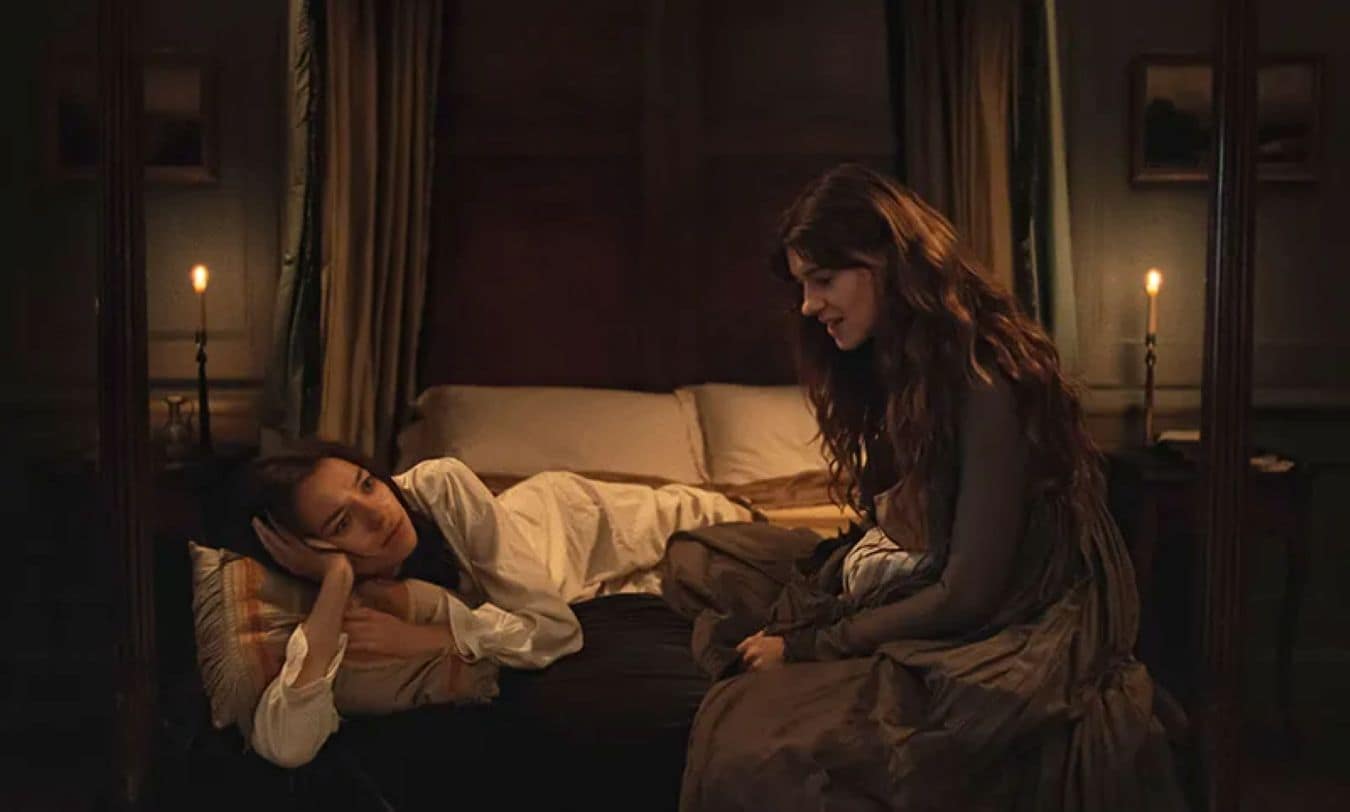
Like many Austen stories, we spend most of the story watching the central debate play out through two sisters. Elinor Dashwood, played by Daisy Edgar-Jones, and Marianne Dashwood, played by Esmé Creed-Miles, guide us as we see where emotion and reason collide. First things first, no, Normal People sickos, you will not get used to Daisy Edgar-Jones calling someone else Marianne; it’s not happening. If you know, you know. That aside, the Dashwood family is navigating the loss of the patriarch of the family, and Mrs. Dashwood and he three daughters are stuck. Their home is set to go to Mr. Dashwood’s son from his first marriage.
What’s left to them as an inheritance is being held from them, and living with a half-brother and a mean wife, they know it can’t go on this way. That’s when Mrs Jennings, a distant relative of the Dashwoods, offers them a Devonshire cottage. Leaving Devonshire is hard for Elinor in particular. Her final days at her family’s estate are made brighter amid the grief over her father by their sister-in-law’s visiting brother, Edward Ferrars, played by George MacKay. MacKay’s presence early in the film is soft and filtered. Edgar-Jones, on the other hand, is brilliant as ever. She immediately wears Elinor’s emotions in her microexpressions and movements.
Elinor’s sister Marianne, the middle child, sees things differently from her sister, and it’s apparent immediately. Marianne seeks thrill and passion. Alternatively, Elinor is quicker to accept stability and smart choices. Creed-Miles is joyous to watch as the dreamer of the family, and played off Edgar-Jones, is an immediate slam dunk.
The Scenery and Music of Any Period Drama are Make-or-Break Components – They’re Perfect Here

Overall, I’m less interested in raving about the story first published in 1811. In fact, the plot is only part of what I love about this film. First, the scenery and cinematography in a period drama like this are really the crux of what makes it work. Pride & Prejudice‘s 2005 adaptation is an all-timer because it feels so good to experience its sights and sounds. Producer Tim Bevan is back for this Austen production, and it shows. The color grading in every scene feels fitting for 2026 in terms of fidelity. That said, it’s equally settled in its 19th-century setting, going to great lengths to ensure you don’t catch moments that feel out of place or out of century.
One element of 2022’s Persuasion starring Dakota Johnson that didn’t work for me was the fact that it felt of today. Roger Goula’s score made me confident this Sense and Sensibility review would be glowing. From the start, we see our typical “woman in field” shots and the ever-present “dinner party with awkward pauses.” It can feel silly and campy or help develop the story. A great score sets the mood, and Goula’s music stirred emotions in me the same way Dario Marianelli’s did in 2005’s Pride and Prejudice. Combined with gorgeous shots emphasizing each sister’s contemplation, it coalesces beautifully.
Edgar-Jones, in particular, feels right for Elinor’s inner strife. As the music swells, we see her contemplate where her happiness fits in the greater world. Is it worth potentially hurting others? What values must come before desire? These plot points, however timeless, can start to feel cookie-cutter. With a movie this beautiful and music this sweet, it never comes close to feeling monotonous.
A Breakout Performance and Focused Pace Keep Sense and Sensibility Fresh Throughout

We also have wonderful performances from Caitríona Balfe, Frank Dillane, Herbert Nordrum, and Fiona Shaw. Nordrum in particular plays his role so well. Very much the classic Austen male character forced into a menace-to-misunderstood hero role, Nordrum nails the brooding. As an Edgar-Jones fan since her breakout role in Normal People, I knew I’d love her in this. Esmé Creed-Miles, however, feels like a revelation. Generally, when a character is written as a bit naive and optimistic, actors play down the character’s intelligence. It’s almost as if their credulity must come at a price.
Creed-Miles, however, opts for a young woman who demands more from the world. Like many Austen stories, we see time-specific gender politics negatively impact women around every turn. While Marianne’s crusade for love with a capital ‘L’ doesn’t feel feminist in purpose, it points to a feminist ideal: no woman should have to settle for her happiness as a political maneuver. Elinor sees practicality in navigating life, knowing full well its limitations on women. Marianne, however, believes so strongly that love must feel invigorating that she opens herself to hurt in the process. In one line, she exclaims to her sister, “If I’m to fall, I’d rather it be from a great height.”
As the two sister’s worldviews play out in search of love and a future for their family, the journey is everything I hoped it would be. I love these types of movies, and I’m grateful that a performance like Creed-Miles helped guide the adventure. In the future, I’ll keep my fingers crossed that her name shows up in more casting announcements.
Review Score for Sense and Sensibility (2026)
4/5
Sense and Sensibility continues to wash over me throughout its opening weekend. I return to moments in its runtime that made me well up. Overall, the film satisfies the hunger any fan of period dramas feels. I believe it goes beyond that, serving as a stellar film in its own right, regardless of genre or its status as a ubiquitous classical literature favorite. With wonderful performances, shots, and music that fit a timeless love story, disappointment is unlikely even for a skeptical viewer. The plot may read as too predictable, or the wistfulness too mawkish. Treated with the seriousness any of us would treat our future and search for love, however, you cannot say it doesn’t nail its core premise. True to the Austen novel and driven by my favorite performances in 2026, you’ll see this film in theaters if you have any sense.
Give your review of Sense and Sensibility in the comments below; the film is out now in theaters.


