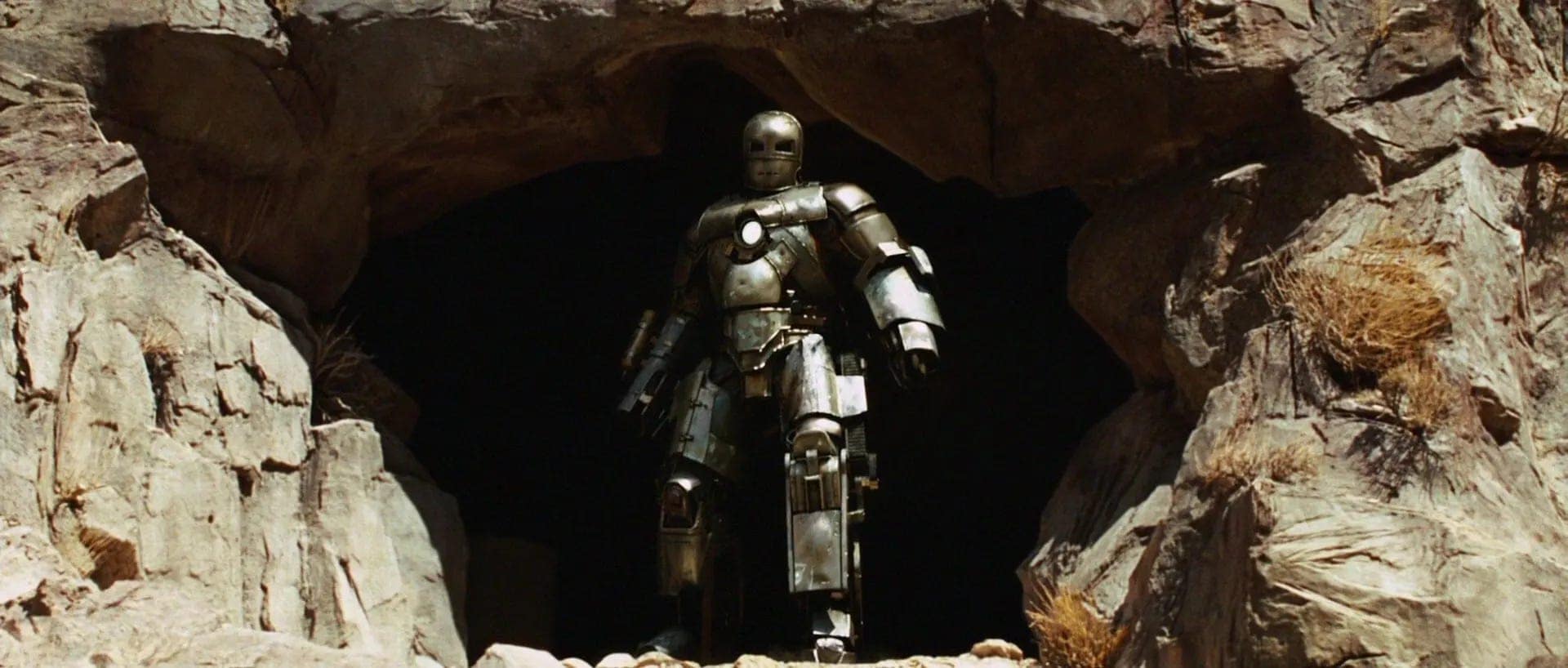
The first official Marvel Studios film, 2008’s Iron Man directed by Jon Favreau, was almost a disaster. The studio didn’t want Robert Downey Jr. to take on the role, mostly because of his tumultuous private life. The character wasn’t all that well-known, and of the “gods” in the Marvel pantheon he wasn’t the most impressive. When they started shooting the movie, the script wasn’t a script but rather a “skeleton” and “an outline” as Terrance Howard and Jeff Bridges said, respectively. Finally, even if every person in the cast and crew did their part perfectly, the success of the movie depended on how realistic a computer-generated cartoon of the hero would look on the screen. People were very skeptical about this film’s chances, but it proved to be a classic in the genre that gave birth to the Marvel Cinematic Universe.
Before the film’s release, people were hopeful about Marvel’s chances in self-financing films, but skeptical. The casting announcement seemed less a celebration and more an anticipatory response to critics. Trade publications paid close attention to the executives in charge (and those who left) for signs of whether this would be a hit or a flop. Seemingly in spite of the odds, the ultimate result was a surprisingly impressive film that made a boatload of money. (Though, it’s $500-plus million take seems tame compared to the MCU’s subsequent billion-dollar box offices.) I admit that I did not see this film in the theater. I don’t recall why, but I assumed that this film would not be a good one. When I later caught it on DVD (yeah, it was that long ago), I realized I’d been a fool. This film isn’t just a happily accidental success, but it’s a great story and the early MCU was shaped in its image.
For all the improvising and rewriting Favreau and the cast did while filming the movie, the story was meticulously structured. Whether this stems from the genius of the writers or editors, every moment does a lot of work. For example, the first time that Stark takes a spin in the Mark 2 armor could have honestly gotten away with just being about that. It’s a little bit of effects porn for the comic fans who can’t believe they are seeing Iron Man soaring around the skies of California. The “learning how to use their powers” scene is a staple of the genre. Yet, this scene also served a crucially important point to the story. This sets up the problem with “icing” when the suits fly too high up into the stratosphere. It’s a small thing, but it shows that while they played fast and loose with blocking and dialogue, the story itself is carefully constructed.
The first scene of the movie is perfect. It’s pure characterization of Tony Stark, showing off RDJ’s uncanny ability to play a lovable asshole. There is no question that this early Tony Stark is a chore of a person to be around, but nonetheless he seems like someone you’d want to be around. This is why the “sex scene” in the early part of the movie is there. The scene with Stark and Leslie Bibb’s Christine “Mz. Brown” Everhart is not used the way sex scenes are normally used in the action genre. The two of them making out and then falling off Stark’s bed is more of a gag than anything. Rather, this scene was meant to set up how despite being a boor, Stark wins people over. (It also serves to set up the introduction of Gwyneth Paltrow’s Pepper Potts.)
But, back to that first scene. After a few minutes of banter and technology that dates the movie (i.e. a MySpace reference, a digital camera, and a CD player boombox), there is big action. These soldier characters, who we all like, are mercilessly killed. RDJ’s fear and his response, running off to try to an call for help is incredible. He’s terrified, but still has a “plan.” It’s also hopelessly futile, and then a bomb with his name on it incites Tony’s journey to becoming a hero by first weakening him. It’s less than five minutes long, and it’s one of the few times where a “X hours later” flashback actually works. There is a school of thought in storytelling that one should start their story at the beginning. If you feel you have to tease some action and then go back in time to hold your audience’s interest, then you probably need to write a better beginning.
Luckily, the flashback portion is a fast-paced 12 minutes. It establishes Tony as a guy who can win over a critic, sleep with her, and then forget about her immediately. We meet Pepper Potts and get a quick sense of her side of their relationship. Stark is impossible, but she loves him (at least, she loves working for him). Then we get a short scene with Stark and Rhodey, establishing their friendship (and Stark’s corrupting influence). Finally, we get the weapons demonstration and we’re all caught up. This section does the necessary exposition work it needs to — letting us know how Tony ended up in a cave in Afghanistan — while also setting up all the important relationships in the film. Then we spend about as much time with Yinsen (a character from the first iteration of Iron Man’s origin story played her by Shaun Toub) and Tony as we did with everyone else.
These cave scenes are important, though they are as fast-paced as the rest of the movie. Not only does Yinsen — retconned into being an engineer who admired Stark and not vice versa — teach Tony about his true legacy as an arms dealer, he also teaches him about sacrifice. Whether or not Tony Stark is the type of guy to make “the sacrifice play” in a future MCU film we’ll discuss, at this moment he’s not. Yinsen buys some time for Tony by grabbing a dead terrorist’s gun and running off shooting wildly. Yet, at no point does he aim the weapon at a person. This iteration of Iron Man kills without hesitation, but Yinsen (his “wise mentor” on the Hero’s Journey) does not. What that means is something fans can consider, pretty much forever.
Every act of this film ends with an Iron Man “reveal,” and this sequence with the Mark 1 is perfect. It’s clunky, a walking tank, but has the look of the original comic book character. The suit has scant few weapons, just a pair of flamethrowers and a missile. He doesn’t just escape, but destroys the camp and the cache of weapons. Finally, he flies off and the suit that saved him is destroyed. We cut to a scene of Tony Stark walking through the desert, a subtle testament to his mettle. He doesn’t quit, even though he’s trekking through the desert with no water and no idea where to go. He’s rescued, but as Jeff Bridges’s Obediah Stane notes later in the film, he comes back a changed man. It wasn’t just the Mark 1 suit that was shattered in the desert, but Tony Stark himself. When he gets back to the U.S. he’s unsure about his company’s direction and unsure about his idea of himself. This sparks another sequence in the film that does impressive dual storytelling work.
Every superhero movie up to this point included a scene where the heroes both test their powers and assemble their costumes. Naturally, with a second suit needing to be built, this film had to do that as well. What makes this sequence compelling, besides RDJ’s impressive performance with just robots and a camera, is that in building Iron Man, Tony is rebuilding himself. He locks himself away from the public eye for weeks, doing the thing he does best: building. His view of himself has been shaken to its core, so like any good engineer he strips away most everything and rebuilds something new. When Iron Man takes the sky, flying past the Santa Monica pier, it’s Tony Stark Mark 2 that’s inside the suit. Intercut with this sequence are a few short scenes of the Ten Rings terrorists piecing together the Mark 1 suit, obviously for nefarious purposes. So, even though Tony is on the path to redemption, his past is not done causing problems for him.
The MCU has its share of romantic subplots, with varying degrees of success. However, the Tony Stark and Pepper Potts relationship is arguably the best of these. Before Tony rebuilds his suit (and himself) he has to cast away old things, including the first Arc Reactor in his chest. The scene with Pepper helping him is the most intimate scene in the entire film. Whereas Stane rips out Tony’s “heart” with violence in the third act, here he gives his heart to Pepper (almost literally). Instead of detracting from the hero’s story, this relationship signals how utterly stripped bare Tony is. He’s sitting in his lab, operating on himself, because he has no one else in his life. He tells Pepper to destroy the old reactor, and it not only sets up the third-act save (though Pepper might be the real hero of the film) but it shows that even at his lowest point Pepper sees the best in him.
The real showpiece of this movie, however, is the reveal of the modern-day Iron Man at the end of Act II. Everhart comes back (ruining Tony and Pepper’s moment at that benefit) and informs Tony that the people who captured him are terrorizing Yinsen’s hometown. This is a very short sequence (because the CGI was likely a huge part of the film’s $140 million budget), but it was the lynchpin of the entire movie. This is not just the first time that the Iron Man springs into action, he goes to war. Taking out an entire terrorist cell (which, worth noting, is terrorizing locals not warring with American soldiers) makes this version of Iron Man a bigger badass than any we’d seen before in cartoons or (maybe even) the comics. If this sequence doesn’t work, the film doesn’t work. Because this is what showcases the awesome power that Tony Stark has unleashed on the world.
Like Captain Marvel, this film featured a lot of cooperation from the U.S. Air Force. So, it didn’t really go into the issue of the war that consumed the country as much as even the comic book Iron Man examined Vietnam. There is one moment, however, when Rhodey briefly monologues about human-piloted planes versus drones. The subtext here is not about the wars in Afghanistan and Iraq, but rather about the human element of war. Rodey’s argument about traditional planes versus drones doesn’t make much sense (because drones are also flown by pilots). However, it does make a commentary on how advanced technological weapons make killing lots of people as easy as the push of a button. There’s a callback to this when the Air Force spies Iron Man on their radar, saying it’s some kind of drone. Even though he’s encased in an invincible suit of armor, Iron Man fights a very personal battle. He is the “pilot without the plane” that he mentions to Rhodey in the scene in the air base.
Marvel has also taken a lot of criticism about the third acts of their Phase One films. Critics say that they leave it all on the table in Act II, thereby leaving very little in the tank for the film’s climax. I freely admit to being an apologist for cape-movies, because I can make a (weak) argument that the 2004 Daredevil was not a terrible film. However, anyone who says that the final act of Iron Man is weak does a terrible disservice to this film’s down-low MVP: Jeff Bridges. Tony Stark 2.0 isn’t too different from the original Tony Stark, save for him having a new idea about what it means to protect the world. Neither Rhodey or Pepper experience much character growth, but Stane is an interesting bit of bait-and-switch that works for both comics fans and people going in cold.
Even though I wasn’t a big fan of the Iron Man comics, I knew that Obediah Stane would eventually become a villain. In the first act of the movie, he’s shown as a clear father-figure for Tony. In the second act, he starts a subtle shift towards the villainous, but it’s not immediately obvious that he’s going to be the main antagonist right away. At the benefit, as Tony yells at him about how the Ten Rings got more Stark weapons, he reveals that he filed an injunction to take the company away from Tony. In the film’s special features, there’s a clip of RDJ and Bridges working out this scene. At one point, it seems there was a physical confrontation. However, the subtle version that appears in the movie is the right call. When Stane says he is trying to “protect” Tony, the audience can still believe him.
Yet, in Act III, Stane goes full dark-side. He is not only revealed to be in league with the Ten Rings, but also to be the person who told them where Tony would be. He kills his accomplices (or, actually, his underlings do it), and takes the Mark 1 suit. When Pepper encounters him in Tony’s office just a scene later, Bridges is so ominous it’s like he is playing a different character. Later, when he confronts Tony, his “sudden but inevitable betrayal” still feels surprising and fresh despite how quickly the character turns. A less capable actor than Bridges would have not been able to pull this off. Obediah’s first scenes evoke a character who is like The Dude but with an MBA. He’s fun, happy, and tries to talk his way out of impossible situations. By the final act of the film, he’s straight-up evil.
It’s no secret that one of that the key parts of the MCU forumla is to create a villain that is a dark reflection of the film’s hero. So, while Iron Monger was a giant, upgraded version of Iron Man’s Mark 1 armor, Stane is also a dark reflection of Tony Stark. He is what Tony would be if he were the type of person to not care that his weapons were being sold to “the bad guys.” Part of why Stark was able to be so smug with Everhart in the early part of the film is because he believed his own hype. The seeds of Stane being an instinctual liar is set up in his introduction when he tries to smooth over Tony’s tumultuous return press conference. Stane could likely answer all of Everhart’s tough questions just as easily as Tony, except he’d know he was bullshitting her. Together, Stane/Iron Monger and Stark/Iron Man represent the ultimate clash of “outdated” versus “visionary.” Stane exploits what already exists, and Tony builds what doesn’t exist but should.
The final element that I think makes Iron Man’s third act so great is that Favreau, RDJ, and all the other decision-makers allowed Tony to fail throughout it. At the start of the third act, Tony basically hits the showers after destroying the Ten Rings’ capability to make war. He sends Pepper on a mission, and then we don’t see him again until Stane steals his Arc Reactor. Fighting the paralysis to get down to his lab — a kind of callback to his trek through the desert — he struggles and strains to get to the spare reactor Pepper framed for him. Earlier I mentioned that Pepper is the hero of the film, and that’s because she’s the one who essentially saves the day. This bit, however, is just how she saves Tony. He wanted that reactor destroyed, and instead she gave him a literal lifeline when everything goes to hell. What’s so remarkable about this scene, however, is it is the first time we see Tony give up. He can’t reach his desk, and he slumps down against it. This allows for the payoff of an earlier joke, when DUM-E the robot arm hands him the reactor.
Stark also loses his fight with Stane. He does best him with the icing problem set up during the test flight, but ultimately Stane is able to recover from that fall. It doesn’t even really buy Tony any time, because Iron Monger attacks again and destroys his suit. Having not had the pleasure of meeting Steve Rogers just yet, Tony still decides to sacrifice himself to stop Stane, a callback to Yisen’s sacrifice. He instructs Pepper to blow up the large Arc Reactor powering the Stark lab, thereby killing Stane and himself. No film is perfect, and Stark is saved less by his Iron Man armor and more by “plot armor.” There is no question that Tony Stark lost this fight, but Stane died because Tony and Pepper have each others’ backs. Again, this is more evidence that Pepper is actually the hero of this movie. However, this is just how she kills the villain and not how she saves the day.
No, Pepper saves the day because she is the only one who takes the helping hand offered by Clark Greggson’s Agent Coulson. This discreet bit of world-building was reportedly supposed to be just a mention of the S.H.I.E.L.D. organization and a hint at things to come. Yet, apparently Greggson’s performance was so good, the higher-ups decided to make him the connective thread to the larger MCU. A lot of times world-building can be an intrusion on the story. When you think about the many problems in Amazing Spider-Man 2, the obvious set-up moments for Spidey’s rogues (supposedly for a Sinister Six movie) usually top the list. However, in this case, we’re meant to think the soft-spoken Coulson is a redshirt. Pepper only goes to him because she’s afraid Stane is about to literally kill her. Yet, by bringing S.H.I.E.L.D. into the situation, finally some grown-ups were handling the problems. They likely tended to civilians injured in the melee, and they helped to provide “cover” stories to both protect Stark’s business and hide Iron Man’s existence from the world.
Of all the things that translate surprisingly well from the pages of comic books to live-action media, secret identities aren’t one of them. Perhaps the character most protective of his identity, Batman, cared very little for revealing who he was in the films by Zack Snyder. He reveals his identities to all of the Justice League members before they sign on, as well as the entire fishing village where he goes to find Aquaman. While hiding your identity to protect your loved ones still makes sense, there’s something about that conflict that feels wasteful in live action versions of these stories. Luckily, Tony Stark was always wishy-washy on that. In the comics, Iron Man was explained as the industrialist’s “bodyguard,” the excuse that Coulson prepared for Stark in this film. Yet, he’s also gone public with being Iron Man in the comics as well. So, the final Iron Man reveal comes when Tony admits to a room full of reporters that he’s the man in the suit. It was a twist on the form back then, and one that proved to be a better source of drama than double-life shenanigans would have. (Also, it set up Civil War all that more convincingly.)
With the benefit of hindsight, we can also see that this scene shows that Tony Stark 2.0 is not a finished product. When he says, “I am Iron Man,” he’s the same guy he was in the opening of the movie. He’s confident, impetuous, and convinced he’s right. Yet, instead of selling weapons to both sides of a war, he’s become the weapon and will mete out justice as he sees fit. He has a sense of responsibility now, but he still thinks he’s the best one to wield it. Recognizing this shows how much work needed to be done in order to paint him as one to place his ability to be Iron Man in the hands of government by the time the third Captain America movie premiered. Like any good comic book character, he changed and learned something through his character’s journey in the story. But he didn’t change so much that he was a different character the next time we meet him.
Iron Man really is a triumph and an iconic classic in the superhero film genre on its own merits. Yes, it is important because it was the foundation on which the biggest shared universe in film history was built. However, if the MCU failed, we’d still be talking about this film as one of the best examples of this type of story. Despite the loose atmosphere and improvisation on the set, this movie is very intentional. It had the entire future of the film arm of Marvel Entertainment on its shoulders, and they were still able to make a compelling, personal film about a man trying to change his legacy. Just like Marvel Comics changed the comic book game by creating relatable heroes with real-world problems, Marvel Studios recognized that their greatest asset was not the super-heroes but the characters in the costumes.
Part of what made this work was the perfect casting of Robert Downey, Jr., who is now basically inseparable from Tony Stark. However, the next film on the MCU slate, The Incredible Hulk directed by Louis Leterrier, was not so lucky. Edward Norton plays Bruce Banner and the Hulk, and is one of the two major re-castings that has happened in the MCU. While it’s the best solo Hulk film, we’ll break down why it’s consistently seen as one of the weakest in the MCU.



One Comment on “Review: ‘Iron Man’ Set the Stage for a Big Universe by Focusing on Individual Characters”