

Everyone says that Ted Lasso Season 4 is failing the women at the center of its story. Apparently, even fictional women have to be perfect. Jason Sudeikis and his team have brought Ted Lasso back for a victory lap three years after its Season 3 finale in May of 2023.
As of this article’s writing, we are seven episodes into a fourth, sequel-style season of Apple TV’s record-setting series. Centered around the framework of the teased women’s league team in the final episode of Season 3, both the audience and Brit Pack of Rebecca Welton (Hannah Waddingham), Keeley Jones (Juno Temple), and Leslie Higgins (Jeremy Swift) meet Ted and his family stateside in Kansas City for a quick catch-up while the big ask is set: will you come back to Richmond? It’s no spoiler, but yes, we will. By Episode 2 we are following Ted, his ex-wife Michelle, and their son Henry back to southwest London, England. Richmond, here we come!
Ted Lasso Writers Receive a Yellow Card for Their Portrayal of Women.
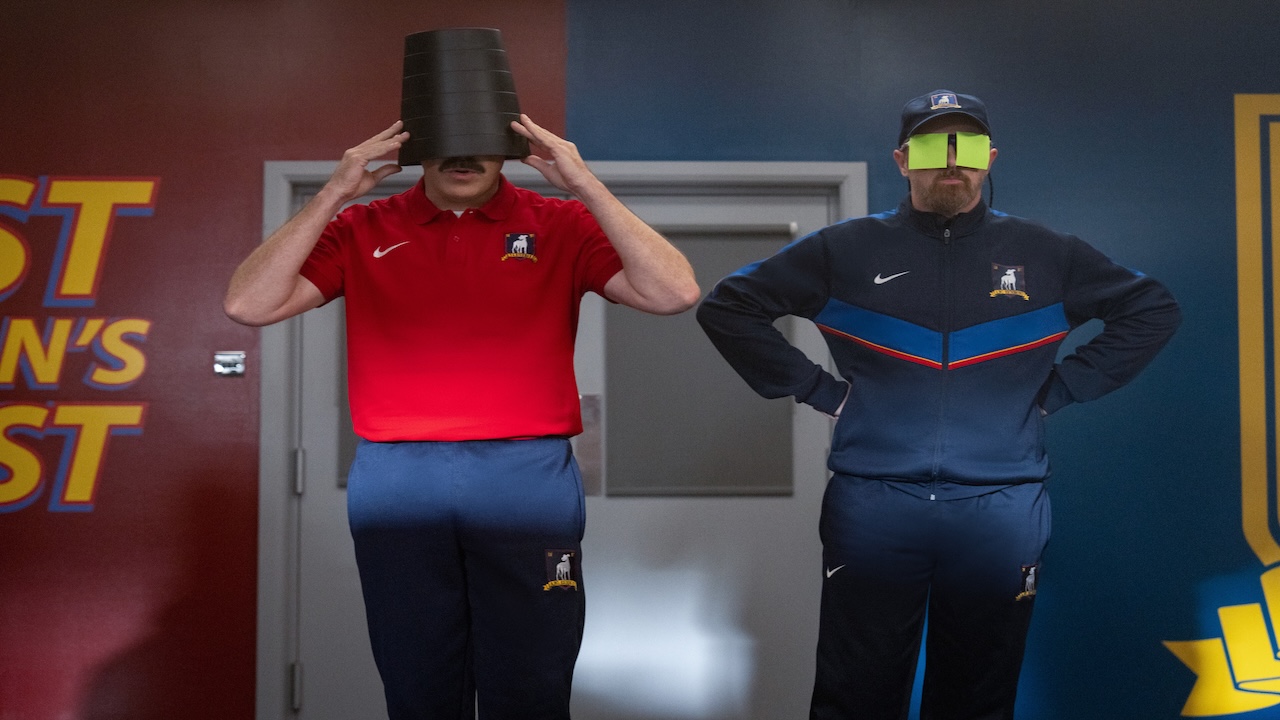
Season 4 was destined to receive a critical eye– between a three-year airwave gap, a new team cast, and socially complex subject matter, there is a lot to be said about the hopeful, witty comedy’s return to streaming. Three-quarters of the way through the season, there is even more to be said about the women who are now at the forefront of this story. Ben Pearson at /Film believes that Rebecca and Keeley are weaker in Season 4 after having maxed out their character growth in 2023 (with a fair point: it was a supposed series finale) and that the newest Coach added to the Greyhounds’ roster is flat and, alarmingly, “only” “a bitch.”
But are the characters really at the forefront of these discussions? Or is it our feelings about women and our prescriptions for them?
In early episodes, we see both brief and glaring moments of the offered notion that the series leaves something to be desired in how its women are written and how the obvious conversations around the way conceptually egalitarian societies and nations handle women’s sporting leagues are portrayed. In Episode 1, Tammy Daneen, the owner of Dazzle Me Moi, the divorce-settlement-chic boutique in Kansas (or was it Missouri?) where Rebecca picks up the Midwest version of her typical power suit, is the type of woman it’s comedically okay for other women to make fun of– overdone, overzealous, and overconfident. She and her taste in textiles are immediately chirped and picked at by high-society Rebecca before the very English guilt of being overheard whilst being classist kicks in. Keeley (who is equally bubbly and bedecked this season), in juxtaposition, has only hearts in her eyes for Ms. Daneen.
Just as these two characters are very different representations of womanhood, so too are their representations of lowercase-f feminism.
Rebecca, who is tall, powerful, and girlbossed to the gods, seems to be what a lot of viewers and critics ascribe to be a Good Feminist. She is successful but not threatening, brilliant but not bookish, classically beautiful but not vain: all the things that are born of an assimilation towards the masculine template of first-class success: corporate offices, private jets, posh lunches. Anything you can do, I can do better. And in heels.
While her missteps in Season 4 are said by some to be out of character, so far as being a parody of herself, it can be argued that the tactless passing over of Tanya Reynolds’ to-the-point Alice Chilton (and in fact, any woman) for the Manager position and her subsequent TBR pile of feminist theory and history are just a natural progression of the archetype. Character growth is not linear, nor is there a finish line. Even the conversation over lunch where her mother’s state of appall at being asked if she thinks Rebecca is a feminist plays as a comedic bit to most, but shows most modern feminists in the audience a portrait of their own mother, aunt, or grandmother– someone who thinks that the qualification of feminist indicates a confirmation of a premise that women are lesser. The expectation that upper-crust Rebecca would be a “better” feminist smacks of the sentiment in Keeley’s driving theme in the season thus far: For women, anything but perfection is seen as failure.
Hi Barbie! Keeley Jones, Feminist Theory Icon in Action.
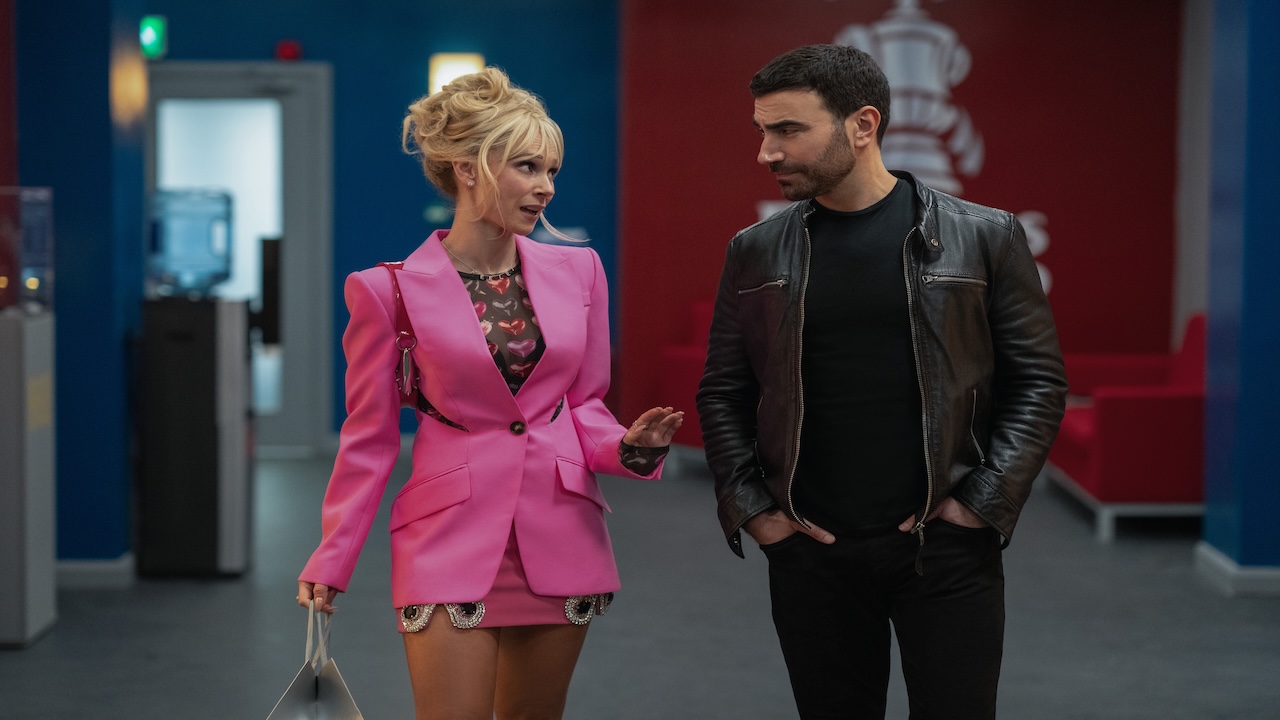
Keely’s pink exuberance and micro-minis find an effective home contrasting Rebecca’s clean, beige aesthetic– both visually and philosophically. This dichotomy is the cheat sheet for what feminism is “supposed” to look like versus the actual effective work of it. If you ask some, she is the sort of woman feminists are supposed to hate. And yet, she is the woman in the room doing the messy work of assessing the unique needs and challenges of a fledgling women’s sports team. While she has mixed results rising to meet them (the preseason kit snafu and attendance rally for their first home match), her character has done so with an intense authenticity and aplomb: wearing, saying, and doing as she pleases.
She is, however, positioned to learn a hard lesson. Dedicated and heart-forward Keeley is acutely aware that women are held to an unfair standard of perfection, but we have yet to see her prove that she knows it is unattainable. So, while she pushes forward with all the enthusiasm a single body can hold, Rebecca is dropping hints to the audience that she will not listen to her cautions. Perfection is a fool’s errand familiar to the series. Look back at the sentiment at the end of Season 3 where Higgins reminds Roy Kent (Brett Goldstein) that people are not supposed to be perfect:
“Human beings are never going to be perfect, Roy. The best we can do is to keep asking for help and accepting it when you can. And if you keep on doing that, you’ll always be moving towards better.”
There lies the central moral of the season: progress, not perfection. Jamie Tartt (Phil Dunster) even had some thoughts on the subject on New Year’s Eve.
Don’t Forget About the Other 22 Women in the Room. Lady Greyhounds Howl at the Moon.
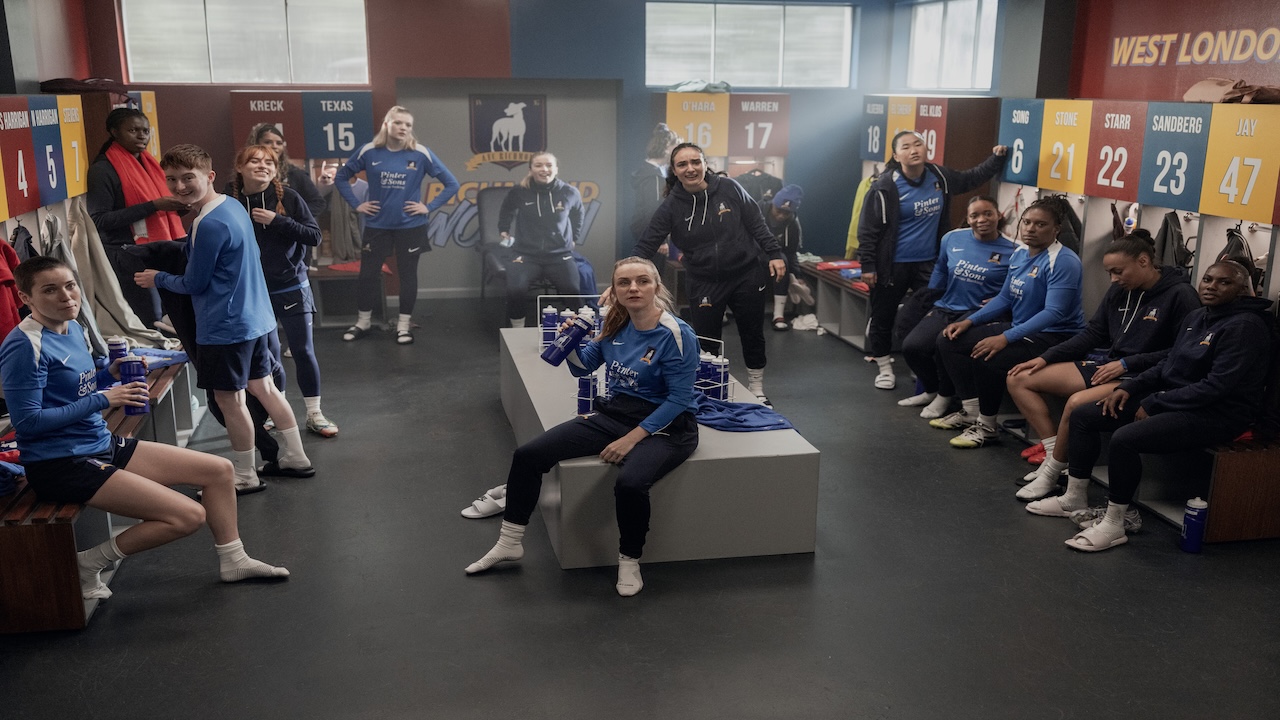
Much like the early press conference in Episode 2, viewers may be spending too much time wondering why the women’s team in the new season don’t feel the same as the men’s team we said goodbye to all those years ago. Why would they?
Coach Chilton and the Lady Greyhounds are just as robust of characters as we were given in the earliest episodes of Ted Lasso all the way back in 2020. They are rowdy caricatures of a type of athlete that the American audience is largely unfamiliar with (then, footballers; now, women’s league), but rooted in some certain and familiar truths: a struggling underdog with a heart of gold only needs to be more confident, a player’s love of the game will cause them to make difficult sacrifices elsewhere in their lives, and the universal fact that goalies are kind of weird. Each character feels distinct and has a unique identity outside of the one they all share.
Episodes 7 (“Yes, & baby”) and 8 (“Follow the Anger”) do a bang-up job using the personal lives of the team to highlight the plights of female athletes while also making sure that viewers care about how they impact the characters individually and personally– and how this impacts their reception of the Universal Lasso Truth of Believe. Viewers are shown in a real and tangible way that the “Richmond Way” may not be so one-size-fits-all as players raucously push back on the assumed premise that a lack of personal belief is what holds them back. They are eager to challenge that self-doubt is anything compared to an intersectional lack of systems and structure that could have given them an easier path to the room they are standing in and those beyond. Coach Chilton, fresh off her come-to-Jesus suspension and “new year, new me” holiday break, bridges the gap with “and win.” This notion is expanded and added to over and over by players in a spirited montage intercut with impressive field play and colorful announcing of an explosive match to open Episode 8.
Because if you can believe in yourself in the face of unserious doctors, a shaken foundation, broken-down cars, and broke-ass baby dads… you can do so much more than win.
Ted Lasso drops new episodes Wednesdays on AppleTV.


One Comment on “Ted Lasso Season 4: Failing Women or Women Failing?”